

If leads have slowed down and your first instinct is to increase your advertising budget, you’re not alone. It’s one of the most common reactions business owners have when growth starts to stall. More Google Ads. More Meta Ads. More traffic. It sounds logical. After all, if more people visit your website, more people should become customers.
But that’s not always how it works. We’ve worked with businesses that were generating thousands of website visits every month and still struggling to hit their sales goals. On paper, their marketing looked successful. Traffic was growing. Ad campaigns were running. Rankings were improving. Yet the leads weren’t coming in. The problem wasn’t attracting visitors. The problem was converting them. That’s why conversion rate optimization services have become one of the smartest investments businesses can make before increasing ad spend. Sometimes the fastest way to grow isn’t getting more traffic. It’s getting more value from the traffic you already have.
Traffic is important. Without visitors, there are no opportunities to generate leads or sales. But traffic alone doesn’t pay the bills. Many businesses discover that their biggest challenge isn’t visibility. It’s website visitors not converting once they arrive on the site. People click an ad, visit a landing page, browse a few sections, and then leave without taking action.
When that happens consistently, it usually means there’s friction somewhere in the customer journey. And before spending more money to attract new visitors, it’s worth identifying what’s preventing current visitors from becoming customers. That’s where conversion optimization comes into the picture.
Conversion Rate Optimization, often called CRO, is the process of improving a website so more visitors take meaningful actions. Those actions could include:
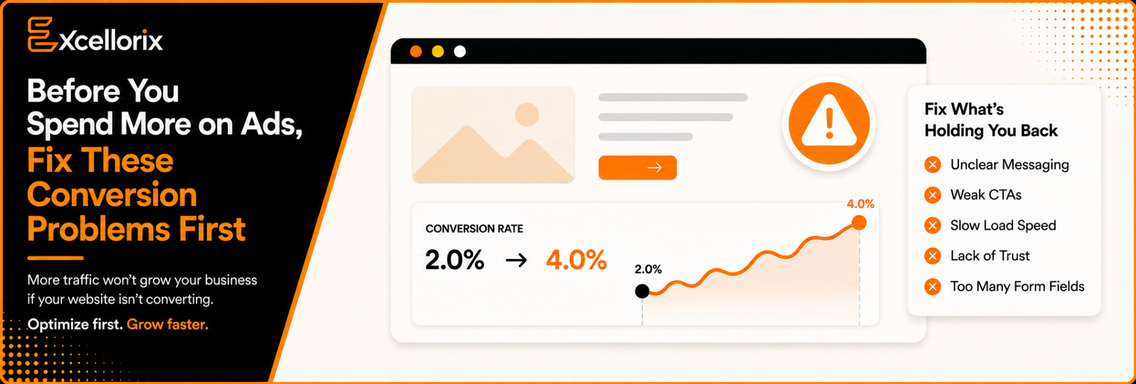
Unlike advertising, CRO doesn’t focus on bringing more people to your website. Instead, it focuses on helping more of your existing visitors become leads and customers. For example, imagine your website receives 1,000 visitors each month and converts 2% of them into leads. That’s 20 leads. If you improve that conversion rate to 4%, you’ll generate 40 leads from the same amount of traffic. No additional advertising budget required. That’s why businesses looking to increase website conversions often see stronger returns from optimization than from simply buying more clicks. And while that sounds simple in theory, the reality is that many websites have hidden issues that quietly hurt conversions every day.
One of the biggest challenges with conversion optimization is that problems aren’t always obvious. A website can look professional, have great branding, and still struggle to generate results. Let’s look at some of the most common issues.
Your Messaging Isn’t Clear
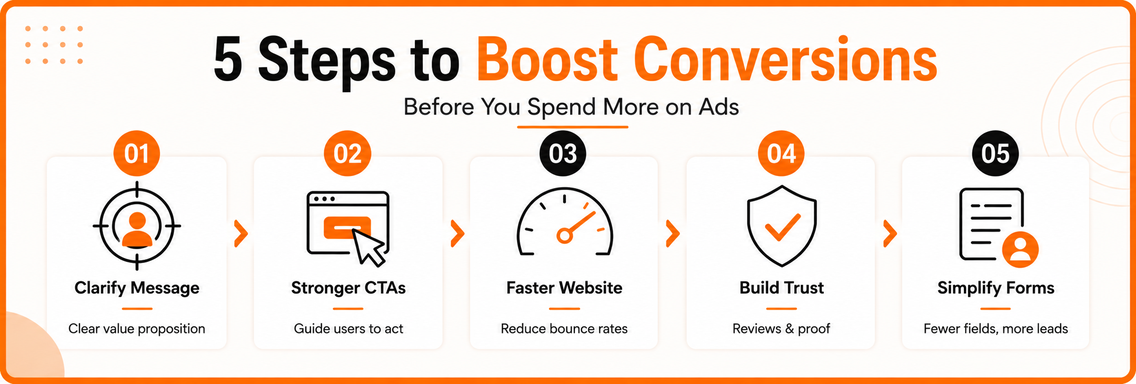
When visitors land on your website, they should immediately understand what you do and how you can help them. Unfortunately, many businesses try so hard to sound unique that they end up confusing people. We’ve reviewed websites where the headline looked impressive but didn’t actually explain the service being offered. Visitors shouldn’t have to scroll halfway down the page to figure out what your business does. Clarity builds confidence.
Confusion creates exits. And once visitors understand your offer, the next step is making it easy for them to take action.
Your Calls-to-Action Are Too Weak
Many websites technically have calls-to-action. The problem is that visitors don’t notice them. Buttons blend into the design. Contact forms are hidden. Important actions aren’t clearly highlighted. Even interested visitors can become frustrated if they aren’t sure what to do next. Your website should guide people naturally through the buying journey. Because if visitors are ready to contact you, you don’t want confusion standing in the way.
Your Website Loads Too Slowly
Speed matters. Most people won’t wait around for a slow website to load. Think about your own behavior online. If a page takes too long to open, you probably leave and try another option. Your visitors do exactly the same thing. This is especially important on mobile devices, where users expect fast experiences. A slow website can quietly damage conversions before visitors even have a chance to see your offer. And even if they stay, they still need a reason to trust your business.
Your Website Doesn’t Build Trust
People don’t buy from businesses they don’t trust. Before contacting a company, most visitors want reassurance that they’re making the right decision. That’s why trust signals matter. Examples include:
These elements help reduce uncertainty and increase confidence. Without them, visitors often hesitate. And hesitation online usually leads to abandonment.
Your Forms Ask for Too Much Information
Nobody enjoys filling out a form that feels like a job application. Yet many businesses ask for information they don’t actually need.
Every additional field creates another opportunity for visitors to leave. A contact form should start a conversation, not feel like an interview. The easier you make it for people to reach you, the more likely they are to do it. Fixing these issues alone can have a significant impact on results. But there’s another reason CRO has become more important than ever.
A few years ago, most people started their buying journey with a Google search. Today, many users begin their research through ChatGPT, Gemini, and Google’s AI Overviews. By the time they reach your website, they’ve often already compared options and narrowed down their choices. That means visitors are arriving with stronger intent. They expect answers quickly. They expect a smooth experience. And they expect to trust what they see. If your website creates confusion or friction, they’ll move on. That’s why modern conversion optimisation strategies focus heavily on user experience, trust, simplicity, and clarity. Getting traffic still matters. But turning that traffic into customers is what drives growth. And before increasing your ad budget, it’s worth asking whether your website is prepared to convert the visitors you’re already attracting.
Before launching another campaign, take an honest look at your website.
Ask yourself:
If several of those answers are no, your biggest opportunity may not be more traffic. It may be website optimization. We’ve seen businesses improve lead generation dramatically simply by fixing conversion issues before spending another dollar on advertising. In many cases, those improvements helped increase website conversions far more effectively than increasing ad budgets.
One business we worked with was preparing to significantly increase its advertising budget because lead volume had slowed down. At first glance, that seemed reasonable. But after reviewing user behavior and website performance, the real issues became obvious. The homepage messaging wasn’t clear.
Important calls-to-action were hard to find. Mobile users experienced slow load times. Trust signals were minimal. Once those issues were addressed, lead generation improved without increasing ad spend. This is why CRO and SEO services often work so well together. SEO helps attract qualified visitors. Conversion optimization helps turn those visitors into leads and customers. Together, they create a much stronger growth strategy than either one can achieve alone.
At Excellorix, we regularly help businesses identify the barriers preventing visitors from taking action. Our conversion rate optimization services begin with understanding how people interact with your website. We analyze user behavior, identify friction points, review conversion paths, and recommend practical improvements that support business goals. The goal isn’t simply more traffic. It’s more leads, more inquiries, and more revenue from the traffic you’re already earning. Because sustainable growth isn’t about attracting everyone. It’s about helping the right visitors take the next step. And if you’re currently dealing with website visitors not converting, a detailed CRO review can often uncover opportunities that have been hiding in plain sight.
Advertising can absolutely help grow a business. But increasing your ad budget before fixing conversion problems often leads to frustration and wasted spend. Before investing more money in traffic, take a closer look at what happens after visitors arrive. Small improvements to messaging, user experience, page speed, trust signals, and conversion paths can produce meaningful results. The businesses that succeed in 2026 won’t always be the ones spending the most money on advertising. More often, they’ll be the businesses that know how to increase website conversions and make every visitor count.
If your website gets traffic but isn’t generating enough leads, there’s usually a reason. At Excellorix, our Conversion rate optimization services help businesses identify what’s preventing visitors from taking action and uncover practical ways to improve performance. Whether you’re investing in paid advertising, SEO services, or both, your website should be helping you get more value from every visitor. Schedule a free strategy call today and let’s identify the opportunities hiding on your website.
Conversion rate optimization services help improve a website’s ability to turn visitors into leads or customers by identifying friction points and improving the user experience.
Common reasons include unclear messaging, weak calls-to-action, slow page speed, poor mobile experiences, complicated forms, and a lack of trust-building content.
Focus on improving your website’s messaging, user experience, trust signals, page speed, and conversion paths. These improvements often generate better results without additional traffic.
The most effective conversion optimisation strategies focus on reducing friction, improving trust, optimizing mobile performance, simplifying conversion paths, and creating a better user experience.
Yes. SEO services help attract qualified traffic, while Conversion rate optimization services help convert that traffic into leads and customers. Together, they create a stronger growth strategy.
Tell us about your goals—we’ll show you how Excellorix can help you get there.