Skip to content


Most business websites do not actually have a traffic problem. They have a conversion problem. That might sound a bit blunt, but it is something that shows up again and again when you look closely at how websites perform. Many businesses spend months improving SEO, running Google Ads, posting on social media, and trying different marketing strategies. Slowly, traffic starts to grow. More visitors begin landing on the website. But then something unexpected happens. The traffic is there, but the results are not. No consistent inquiries. No steady leads. No predictable sales.
At that point, most business owners assume they simply need more traffic. But often, that is not the real issue. If people are already visiting your website and still not taking action, something is going wrong after they land. That is exactly where What Is Conversion Rate Optimization becomes important. In simple terms, CRO is about improving what happens after someone visits your website so more of them actually become customers. Because in 2026, getting traffic is not enough anymore. Turning that traffic into real business results is what actually matters.
What Is Conversion Rate Optimization on a Website?
Conversion rate optimization, often called CRO, is the process of improving your website so more visitors take meaningful action. That action could be:
- Filling out a contact form
- Booking a consultation
- Making a purchase
- Signing up for a demo
- Calling your business
- Requesting a quote
Instead of focusing only on bringing more traffic, CRO focuses on improving what happens after visitors arrive. In simple terms, CRO explained means making your website clearer, easier to trust, and easier to take action on. Think of it like a physical shop. If people walk in every day but no one buys anything, the issue is usually not foot traffic. It is confusion, lack of trust, poor experience, or unclear messaging. Websites work the same way. And many businesses still overlook this while focusing only on getting more clicks.
What Counts as a Conversion on a Website?
A conversion is any action that moves a visitor closer to becoming a customer. Different businesses define conversions differently based on their goals. For ecommerce businesses, conversions include product purchases, checkout completions, and add to cart actions. For service based businesses, conversions include contact form submissions, phone calls, consultation bookings, and quote requests. For SaaS companies, conversions include demo requests, free trials, and account signups. This is why conversion optimisation for beginners can feel slightly confusing at first.
Every business tracks success differently. But the core idea stays simple. More meaningful actions from the same amount of traffic.
Why Conversion Rate Optimization Matters More in 2026
Online behavior has changed a lot in recent years. People are faster to judge and quicker to leave. Within a few seconds of landing on a website, users are already deciding whether they trust the business or not. They are asking:
Does this feel reliable?
Can I understand what they offer quickly?
Is this easy to use?
If the answer is not clear, they leave.
Quietly and instantly.
And most businesses never realize how many visitors they are losing.
At Excellorix, we often see companies investing heavily in SEO services, paid ads, and content marketing while their website quietly reduces conversions because of:
- Weak messaging
- Slow mobile experience
- Confusing layout
- Generic content
- Weak calls to action
- Lack of trust signals
The traffic is not the problem. The website experience is. That is why CRO has become a core part of modern digital growth.
Why CRO Is More Than Just Button Changes
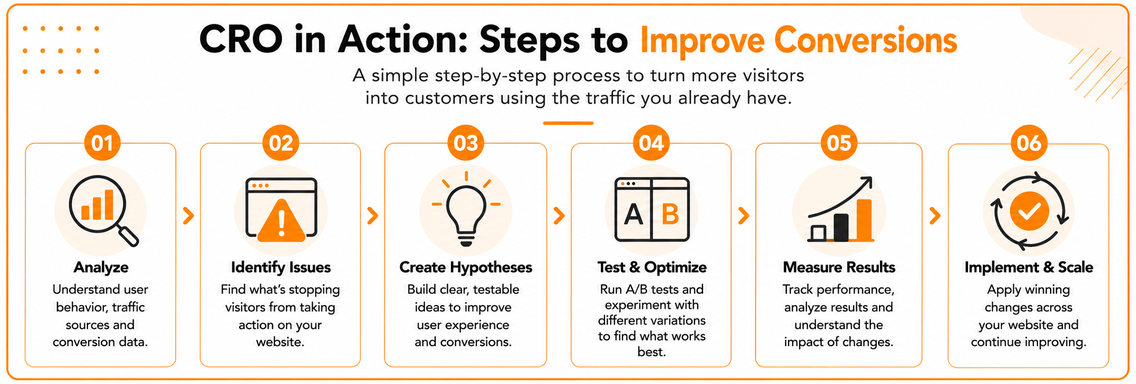
Many people think CRO is just about changing button colors or running A B tests. That is a very small part of it. Real CRO is about understanding user behavior.
Why are people leaving?
Where are they getting stuck?
What information are they missing?
What is stopping them from trusting the business?
Sometimes the issues are small.
A slow page.
A confusing headline.
A long form.
But small issues create big drop offs.
For example:
Shorter forms often increase leads
Faster pages improve engagement
Clear messaging builds trust
Stronger calls to action improve conversions
Most websites do not fail because of design. They fail because of confusion.
Why Many Business Websites Fail to Convert Visitors
If CRO is so powerful, why do so many websites still struggle? Most of the time, the reasons are simple.
Weak Messaging
Many websites try to sound impressive instead of clear. Visitors do not want fancy words. They want clarity. They want to know:
- What you do
- Who you help
- Why it matters
- What they should do next
If this is not obvious, they leave.
Poor Mobile Experience
Most traffic comes from mobile devices now. If your website is slow or hard to use on mobile, conversions drop immediately. Users do not wait. They move on.
Too Much Friction
Friction is anything that slows users down. Long forms, confusing layouts, hidden pricing, and slow pages all increase friction. The more friction, the fewer conversions.
Lack of Trust
People are cautious online.
They look for reviews, testimonials, case studies, and clear branding before taking action. Without trust, even good traffic does not convert.
What Does a CRO Agency Do for Businesses?
At this point, many business owners start wondering what does a CRO agency do and whether it is worth it. A CRO agency improves how your website performs using the traffic you already have. Instead of only focusing on attracting visitors, they focus on what happens after people arrive. This includes:
- User behavior analysis
- Heatmaps and session reviews
- Landing page improvements
- Form optimization
- Messaging improvements
- Conversion tracking
- A B testing
A good CRO agency combines psychology, data, and user experience.
The goal is simple.
More leads.
More sales.
Better ROI.
Beginner Friendly CRO Improvements That Actually Work
You do not always need a full redesign to improve conversions. Small changes can make a big difference.
Improve Headlines
Make it clear what you do and who it is for. Clarity converts better than creativity.
Simplify Forms
Only ask for essential information. Long forms reduce conversions.
Improve Mobile Speed
Even a small delay can reduce conversions significantly.
Use Clear Calls to Action
Instead of “Submit,” use action based text like:
- Book a Free Call
- Get a Quote
- Schedule a Consultation
Add Trust Signals
Reviews, testimonials, and case studies reduce hesitation and increase confidence.