Skip to content


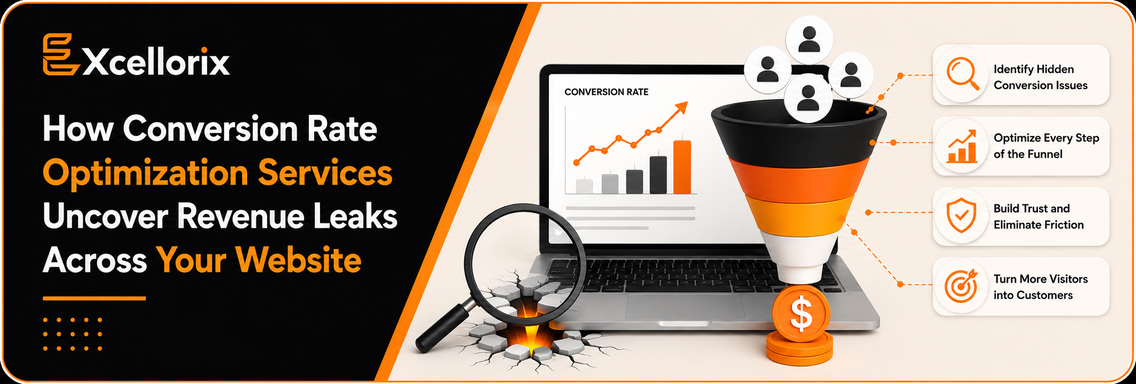
Your website could be getting plenty of traffic and still be losing revenue every day. It happens more often than most business owners realize. People find your business through Google, paid ads, social media, or referrals. They visit your website, browse a few pages, and then leave without taking action. No call. No form submission. No purchase. No appointment booked. At first glance, it may seem like a traffic problem. But in many cases, the real issue is what happens after visitors arrive. This is why conversion rate optimization have become an essential part of digital marketing. Instead of focusing only on attracting more visitors, they help businesses identify and fix the issues preventing visitors from becoming customers. Sometimes the fastest path to growth is not increasing traffic. It’s improving the website experience for the traffic you already have.
What Are Revenue Leaks?
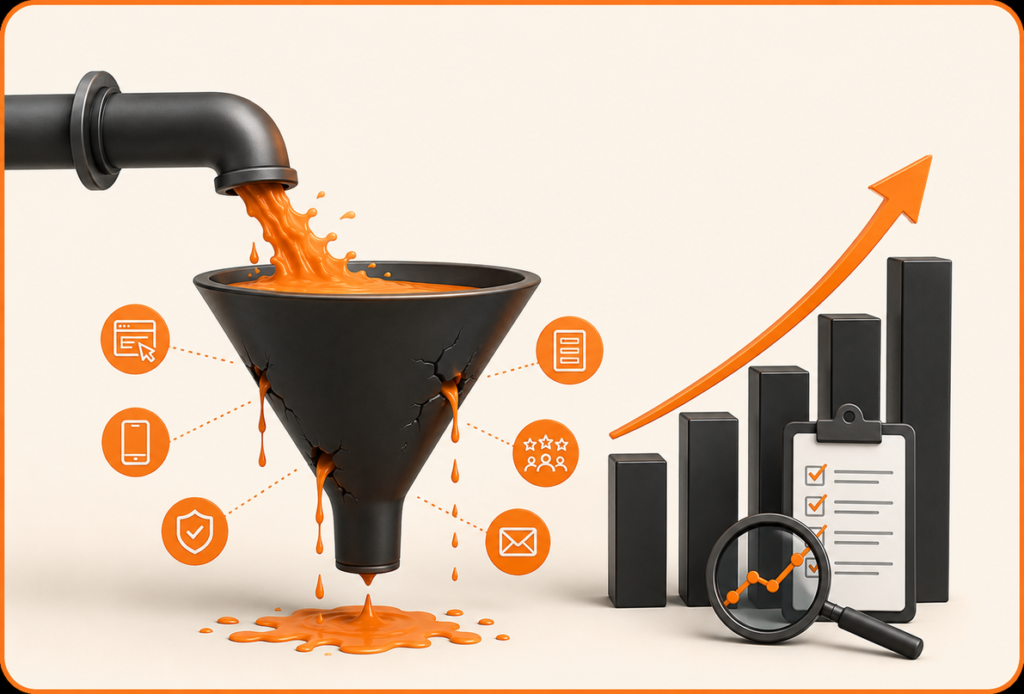
A revenue leak is any obstacle that causes potential customers to leave your website before taking action. Some leaks are obvious. A broken contact form or a slow-loading page can quickly drive visitors away. Others are much harder to spot. Visitors may be interested in your service but struggle to find the information they need. They may start filling out a form and abandon it halfway through. They may want to contact your business but never find a clear next step. Most businesses never see these leaks because visitors rarely explain why they leave. They simply move on to another website. Over time, those missed opportunities can add up to significant lost revenue.
Revenue Leak #1: Visitors Landing on the Wrong Pages
Not every visitor arrives with the same goal. Some people are researching. Others are actively looking for a solution and are ready to take action. When high-intent visitors land on a page that doesn’t match what they’re searching for, they often leave before exploring further. Imagine searching for a specific service and landing on a generic homepage instead of a detailed service page. Most people won’t spend several minutes hunting for answers. They’ll leave and continue searching elsewhere. This is where conversion funnel optimization becomes important. Visitors should land on pages that match their intent and guide them toward the next step.
Revenue Leak #2: Service Pages That Don't Build Confidence
Getting visitors to the right page is only half the battle. Once they arrive, the page must answer their questions. Many service pages focus heavily on explaining what a company does but fail to explain why a customer should choose them. Visitors often want answers to questions like:
- What makes this company different?
- How does the process work?
- What results can I expect?
- Why should I trust them?
When those questions remain unanswered, uncertainty grows. And uncertainty rarely leads to conversions. Strong service pages help visitors feel informed and confident enough to take the next step.
Revenue Leak #3: Mobile Friction
Many business owners review their websites on desktop computers. Most visitors don’t. Today, a large portion of website traffic comes from mobile devices. A website that works perfectly on desktop may feel frustrating on a smartphone. Buttons may be difficult to tap. Forms may be hard to complete. Important information may be buried beneath large images or unnecessary content. These small issues create friction that often goes unnoticed. In many cases, businesses wondering why website visitors are not converting discover that the mobile experience is creating barriers throughout the customer journey.
Revenue Leak #4: Missed Lead Capture Opportunities
Not every visitor is ready to become a customer immediately.Some people need more information. Others are still comparing options. Unfortunately, many websites offer only one conversion option: contact us. If visitors aren’t ready to reach out today, they leave with no reason to return. That’s a missed opportunity. Successful websites provide additional ways to stay connected, including:
- Email newsletters
- Downloadable guides
- Industry insights
- Helpful resources
These options allow businesses to nurture relationships with visitors who may become customers later.
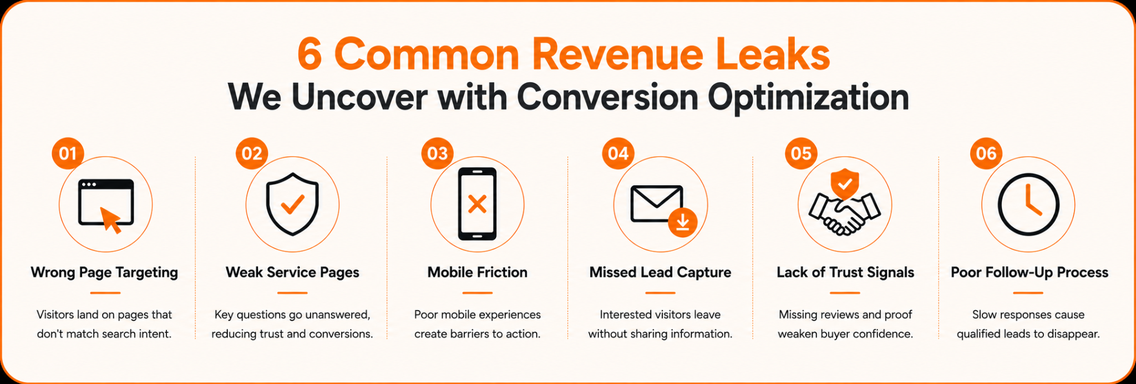
Revenue Leak #5: Lack of Trust Signals
Think about your own buying habits. Before making a decision, you probably check reviews, testimonials, or examples of previous work. Your visitors do exactly the same thing. Trust plays a major role in online decision-making. Yet many websites provide very little proof that they can deliver results. Common trust gaps include:
- Missing testimonials
- Few online reviews
- No case studies
- Outdated website design
- Limited company information
When trust signals are missing, visitors often continue researching competitors. Even small improvements in credibility can have a significant impact on conversion rates.
Revenue Leak #6: Poor Follow-Up Processes
A revenue leak doesn’t always happen on the website itself. Sometimes it happens after a lead is generated. A visitor fills out a contact form. Hours pass. Then a day. Then another. Meanwhile, a competitor responds within an hour. Most of us know how that story ends. The company that responds first often has the better chance of winning the business. Even the best website cannot compensate for slow follow-up. Businesses that combine a strong website experience with a strong sales process typically achieve better results.