


Your website may still be getting traffic. People are finding your business through Google searches, social media, paid ads, referrals, and even AI generated search results. But traffic alone does not mean your website is helping your business grow. The real question is whether your website is turning visitors into leads and customers. In 2026, customers expect websites to feel fast, modern, trustworthy, and easy to use. If your site feels outdated or confusing, people usually leave without saying anything. That is one of the biggest signs your business website needs a redesign.
Many businesses continue investing in SEO services, paid ads, and content marketing while ignoring the website experience itself. The traffic arrives, but the website quietly breaks the customer journey. A business website today is more than an online brochure. It acts as:
If the experience feels outdated, slow, or difficult to navigate, customers notice immediately. At Excellorix, we often see businesses focus heavily on getting traffic while overlooking the website itself. But in many cases, the website becomes the reason leads stop converting. Here are the biggest warning signs your website may already be costing you customers.
One of the clearest outdated website signs is when competitor websites instantly feel more modern and professional than yours. Most visitors form an opinion about your business within seconds. Before reading your services, they subconsciously judge your credibility through design. Things like:
can quietly reduce trust. Modern websites focus on clean layouts, better readability, mobile friendly design, and clear messaging. If your website still feels like it belongs several years ago, visitors notice immediately.
Good design is no longer just about appearance. It is about making users feel comfortable enough to take action. But design alone is not enough anymore. Even visually strong websites struggle if performance feels slow.
Website speed now affects:
Most users will not wait for a slow website. If pages take too long to load, visitors usually leave before exploring your services properly. Many businesses develop speed problems gradually because of:
Eventually, the browsing experience becomes frustrating, especially on mobile devices. Google also uses Core Web Vitals and page experience signals as ranking factors, which makes speed an important part of any website redesign checklist.
Signs Your Website May Be Too Slow
A fast website feels professional. A slow website often feels neglected. And even when visitors stay on the website, another problem often appears. The site still fails to generate leads.
Traffic alone does not grow a business. Conversions do. If users visit your website but rarely:
then the website may be creating friction. Common conversion problems include:
Many websites unintentionally make visitors work too hard to understand what the business actually does and what step they should take next. Modern websites guide users naturally through the experience. This is often the stage where businesses start seriously thinking about when to redesign your website instead of endlessly making small cosmetic updates. If conversions remain weak despite investing in SEO services or paid ads, the website structure itself may already be limiting growth.
Most users now browse websites from mobile devices first. Yet many business websites still treat mobile optimization like an afterthought. That creates major usability issues such as:
Mobile users are less patient than desktop users. If the experience feels frustrating, they leave quickly. Google also prioritizes mobile first indexing, meaning poor mobile usability can directly affect SEO visibility. This is why mobile optimization belongs near the top of every serious website redesign checklist. A strong mobile experience now influences conversions, engagement, trust, and lead quality across almost every industry.
Search behavior has changed significantly in recent years. Google rankings still matter, but AI driven search experiences are also changing how websites are discovered online. Modern search systems prefer websites with:
Older websites often struggle because they were never designed for modern SEO expectations. If your website:
then visibility problems can appear even if you continue publishing content. This is another major reason businesses start noticing signs your business website needs a redesign.
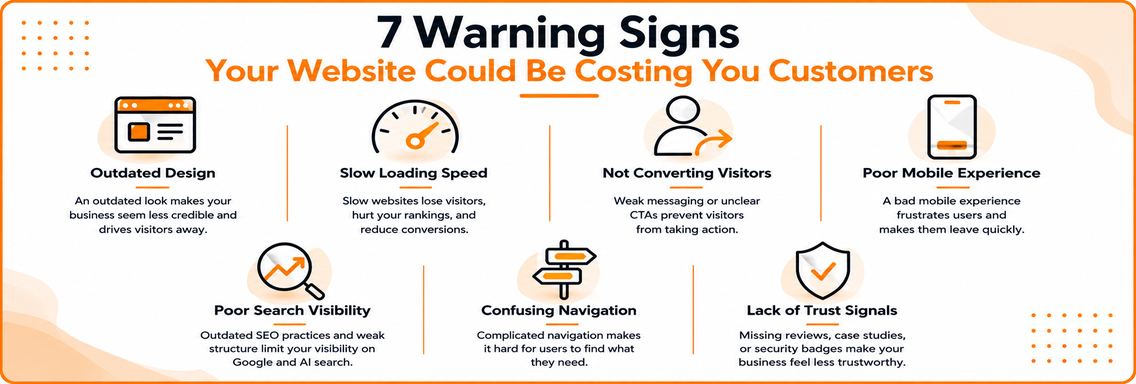
Confused users rarely convert. One of the biggest usability mistakes businesses make is overcomplicating navigation and page structure. When users cannot quickly find:
they usually leave. Many businesses do not notice navigation issues until lead quality starts dropping. Modern websites reduce friction by guiding visitors clearly through the experience. Good navigation should feel effortless. If users constantly:
your website structure may need serious improvement. Sometimes the issue is not usability alone. The website may simply no longer reflect the business you are today.
Businesses evolve over time. Unfortunately, many websites do not evolve with them. As companies grow, they often:
But the website still communicates an older version of the business. That creates disconnect. Visitors may assume your services are outdated or that competitors are more established. A modern website should reflect where your business is today, not where it was years ago. For many companies, this becomes the moment they finally understand when to redesign your website.
If you are reviewing your current website, here are some important areas to evaluate as part of a proper website redesign checklist:
Design
Performance
SEO
Conversion Optimization
A website should support business growth, not quietly limit it. If your website creates confusion, weak conversions, slow experiences, or poor usability, it can quickly become a liability instead of an asset. That is why recognizing outdated website signs early matters so much.
At Excellorix, we believe websites should do more than simply exist online. They should support visibility, improve conversions, strengthen trust, and create a better customer experience across every marketing channel. Because in 2026, businesses are not only competing on products or pricing anymore. They are competing on digital experience. And customers notice the difference very quickly.
If your website feels outdated, struggles to convert visitors, or no longer reflects your business properly, it may be time to rethink the experience completely. You can also schedule a free strategy call with Excellorix to identify what may be limiting your website’s performance, SEO visibility, and long term growth.
Some of the biggest signs your business website needs a redesign include outdated design, slow loading speed, poor mobile experience, declining conversions, and weak SEO visibility. If visitors are landing on your website but rarely contacting your business or taking action, the website itself may be creating friction in the customer journey.
Some common outdated website signs include cluttered layouts, slow loading pages, inconsistent branding, difficult navigation, and poor mobile responsiveness. Modern users expect websites to feel fast, clean, and easy to use. If your website feels old compared to competitors, it can quickly reduce trust and conversions.
Most businesses should evaluate when to redesign your website every 2 to 4 years depending on performance, industry trends, and business growth. If your website no longer reflects your services, struggles to generate leads, or performs poorly on mobile devices, it may be time for a redesign sooner.
Yes. A properly planned redesign can improve page speed, mobile usability, internal linking, user experience, and technical SEO structure. Combined with professional SEO services, a redesign can help improve search visibility, engagement, and conversions.
A strong website redesign checklist should include design improvements, mobile optimization, speed optimization, SEO structure, internal linking, conversion focused CTAs, trust signals, and better user experience. The goal is not only to improve appearance but also to improve performance and lead generation.
Tell us about your goals—we’ll show you how Excellorix can help you get there.