Skip to content


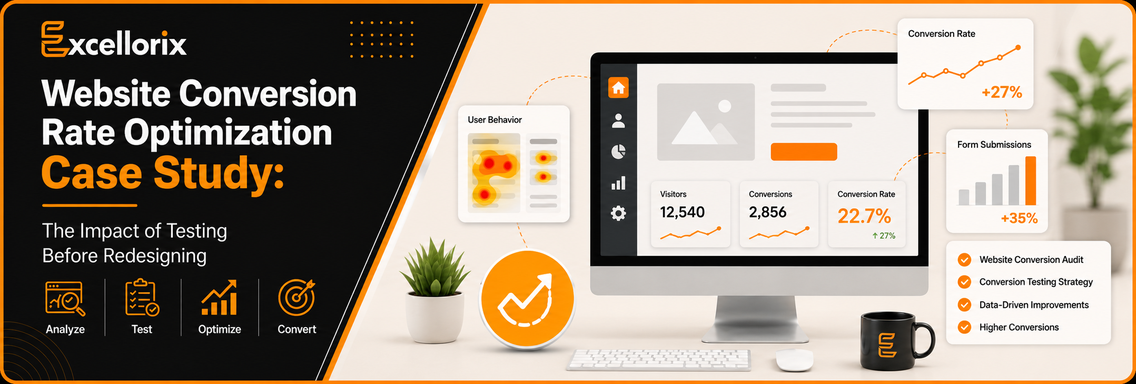
Most businesses assume that low conversions mean they need a new website. The homepage feels outdated. Competitors launch modern designs. Internal teams start pointing out things they dislike. Before long, a redesign project is approved. The problem is that design is not always the reason visitors fail to convert. In many cases, businesses spend months rebuilding their websites only to see little improvement in leads, sales, or inquiries. The website looks better, but the results stay the same. This website conversion rate optimization case study highlights why testing before redesigning often produces better results. Instead of immediately rebuilding the website, we started with a detailed website conversion audit, analyzed user behavior, and developed a structured conversion testing strategy to uncover what was actually preventing visitors from taking action. What we discovered changed the direction of the entire project.
Why Redesigning First Can Be a Mistake
When conversion rates decline, businesses often focus on what they can see. The website looks old. A competitor’s site looks more modern. The design no longer feels exciting. While those concerns may be valid, they rarely explain why visitors are not converting. Visitors do not come to your website to admire the design. They come looking for answers. They want to know whether you can solve their problem, whether they can trust you, and what they should do next. If those questions are not answered clearly, even a beautiful website can struggle to generate results. That is why redesigning without data can become an expensive guessing game.
Starting With a Website Conversion Audit
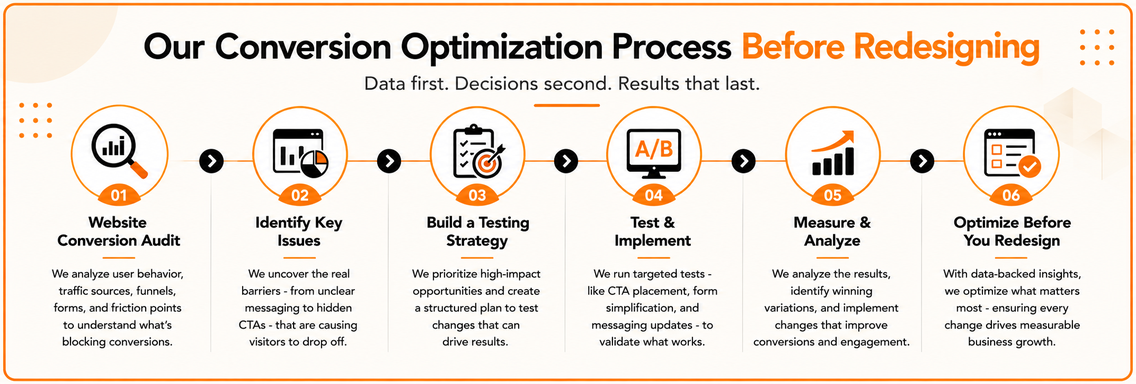
Before recommending any major changes, we conducted a comprehensive website conversion audit. The goal was simple: understand how real users were interacting with the website. We reviewed:
- User behavior data
- Heatmaps and session recordings
- Traffic sources
- Conversion paths
- Mobile performance
- Exit pages and bounce rates
Almost immediately, patterns began to emerge. Interestingly, the biggest issues had very little to do with the design itself. Instead, visitors were encountering friction throughout the conversion process.
What the Data Revealed
Once we combined analytics with user behavior insights, the real problems became clear. Visitors were arriving on the website and exploring pages, but many were leaving before completing an inquiry. Several issues stood out:
- The value proposition was not immediately clear.
- Trust-building elements were buried too far down the page.
- Calls-to-action were easy to miss.
- Forms requested more information than necessary.
- Mobile visitors experienced additional friction.
None of these problems required a redesign to identify. More importantly, none of them required a redesign to test. That realization became the foundation of our conversion testing strategy.
Building a Conversion Testing Strategy
Rather than rebuilding the website, we focused on testing small improvements first. The objective was straightforward. If targeted changes could improve conversions, we wanted to identify those opportunities before investing significant time and money into a redesign. Testing allows businesses to make decisions based on evidence instead of opinions. Instead of saying, “We think this will work,” you can confidently say, “We know this works.”
Test #1: Improving CTA Visibility
The primary call-to-action existed, but many visitors never saw it. We repositioned it higher on the page and improved its visibility. The result was immediate. More visitors engaged with the next step because it was easier to find.
Test #2: Simplifying the Contact Form
The contact form contained unnecessary fields. From the business perspective, every question seemed useful. From the visitor’s perspective, however, the form felt like work. We removed unnecessary fields and simplified the process. As expected, completion rates improved.
Test #3: Moving Trust Signals Higher
The website already contained testimonials, reviews, and credibility indicators. The problem was that most visitors never reached them. We moved those trust signals closer to key decision points. As confidence increased, conversions improved.
Test #4: Clarifying Messaging
The website focused heavily on the company. Visitors cared more about solving their own problems. We adjusted headlines and messaging to focus on customer outcomes rather than company descriptions. Engagement improved, and visitors spent more time interacting with important pages.
The Most Surprising Result
The client expected that a redesign would be necessary. Instead, meaningful improvements happened before any redesign work began. There were no major visual changes. No expensive rebuild. No new website structure. Yet performance improved across the board. Conversion rates increased. Form submissions increased. User engagement improved. Lead quality became more consistent. This became a valuable website optimization case study because it showed how data-driven improvements could deliver measurable results before a redesign was ever needed. The website looked almost identical. It simply worked better.