Skip to content



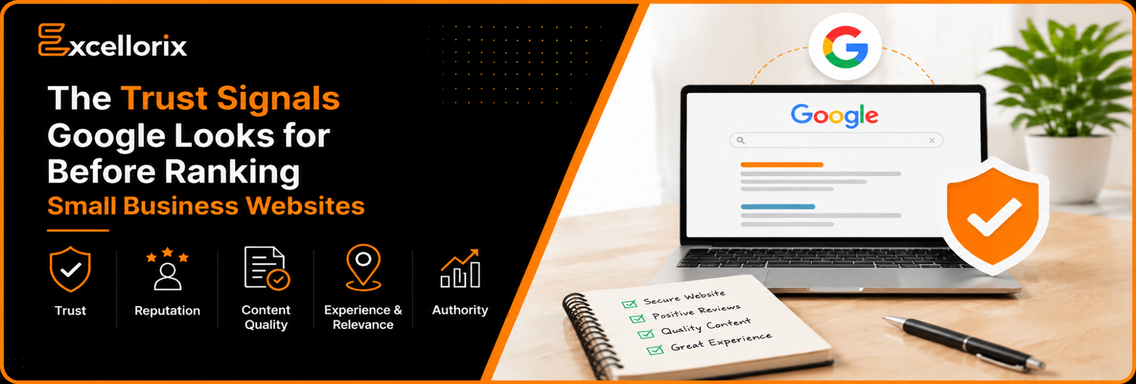
Have you ever looked at Google’s search results and wondered why a competitor ranks above you, even though your services are better? It happens to small businesses every day. Many owners assume the answer is simple. Add more keywords, publish another blog, or build a few backlinks. Those tactics still matter, but they are no longer enough on their own. Search has changed. Google has become much better at recognizing businesses that people can genuinely trust. Instead of rewarding websites that simply tick SEO boxes, it now looks for signals that show a business is credible, helpful, and worth recommending. That is why modern SEO services for small business focus on much more than rankings. The goal is to create a website that answers real questions, provides a great user experience, and gives visitors confidence from the moment they arrive.
Think about how you choose a business yourself. Whether you need an accountant, a roofer, or a marketing agency, you probably do not contact the first company you find. You read reviews, browse the website, check recent work, and make sure the business looks legitimate before making a decision. Google follows a similar process. It examines hundreds of signals before deciding which websites deserve a place at the top of the search results. These signals help it determine whether users are likely to have a positive experience after clicking on your website.
The good news is that you do not need the budget of a national brand to earn Google’s trust. Small businesses have the same opportunity to build credibility by consistently providing value and maintaining a professional online presence.
Why Trust Matters More Than Ever
Over the last few years, search has become much more competitive. People no longer rely only on traditional Google searches. Many now use AI-powered tools, voice assistants, and online reviews before deciding which business to contact. Because of this shift, Google ranking factors have evolved as well. Search engines are no longer asking only, “Does this page contain the right keyword?” They are asking much bigger questions. Is this business active? Does it provide accurate information? Do customers have positive experiences? Would someone feel confident contacting this company? When the answers to those questions are yes, your website becomes much easier to trust. That trust is built through many small signals working together. Helpful content, genuine customer reviews, fast page speeds, accurate business details, and a positive user experience all strengthen your credibility over time. Businesses that focus on these areas usually see more sustainable growth because they are building something that lasts instead of chasing the latest SEO shortcut.
Start With Content That Helps People
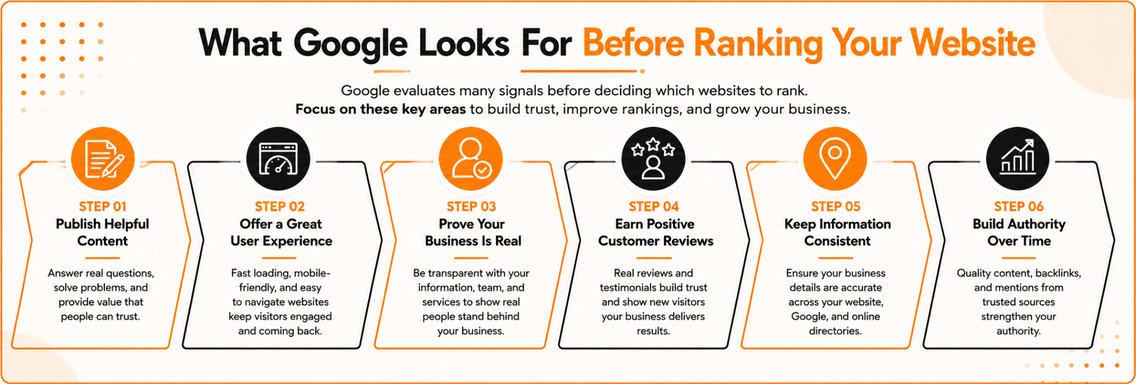
One of the biggest mistakes businesses still make is creating content only for search engines. You have probably seen articles that repeat the same keyword over and over without actually answering the reader’s question. They may rank briefly, but they rarely build trust. Instead, think about the questions your customers ask before they contact you. If you are a contractor, explain how homeowners can prepare for a renovation. If you own a law firm, answer common legal questions in simple language. If you provide digital marketing, explain why more website traffic does not always lead to more sales. Helpful content demonstrates expertise instead of simply claiming it. Before publishing your next article, ask yourself one simple question.
Will someone leave this page knowing something useful they did not know before?
If the answer is yes, you are creating content that benefits both readers and search engines. That is also one of the smartest ways to improve Google rankings because useful content naturally earns more engagement, shares, and trust.
Build a Website People Enjoy Using
Helpful content gets people to your website, but the experience they have once they arrive matters just as much. Imagine walking into a store where the lights flicker, products are scattered everywhere, and no one is available to answer your questions. Chances are, you would leave within a few minutes. A confusing website creates the same feeling. If pages load slowly, menus are difficult to navigate, or important information is buried under several clicks, visitors become frustrated. Most will simply return to the search results and choose another business. This is why website performance has become one of the important Google ranking factors. A fast, user-friendly website keeps people engaged and gives them confidence that your business is professional.
Take a few minutes to review your own website. Can visitors understand what you do within the first ten seconds? Is your phone number easy to find? Does your website work smoothly on a mobile phone? If the answer to any of those questions is no, improving the user experience should become a priority. Small changes, such as compressing large images, simplifying navigation, and fixing broken links, often have a bigger impact than publishing another blog post.
Show That Your Business Is Real
A fast website creates a good first impression, but people also want to know who they are dealing with. One of the easiest ways to build credibility is by being transparent. Your website should clearly explain who you are, what services you provide, where you operate, and how customers can contact you. An informative About page, detailed service pages, and accurate contact information all help remove uncertainty. Whenever possible, include real team photos, client testimonials, certifications, or examples of completed projects. These details show there are real people behind the business, not just a collection of marketing claims.
Let Your Customers Build Trust for You
Once visitors know your business is legitimate, they usually look for one more thing before making a decision. They want proof that other customers had a positive experience. That is why customer reviews continue to play an important role in SEO. They influence buying decisions while also helping search engines understand that your business is active and trusted.
Instead of asking customers to leave a simple five-star rating, encourage them to explain what problem you solved and how your service helped them. Specific reviews are far more valuable because they provide context and answer questions future customers may already have. It is equally important to respond to reviews. Thank customers for positive feedback and address concerns professionally when someone is unhappy. A thoughtful response shows that you care about your customers, and that builds confidence with both people and search engines.
Another area many businesses overlook is consistency. Your business name, address, phone number, website, and business hours should match across every platform where your company appears. Following these local SEO tips for small business owners may not seem exciting, but they make it easier for search engines to trust the information they find about your business. In the long run, credibility is built through dozens of small improvements rather than one major SEO trick. Every helpful article, positive review, updated page, and satisfied customer adds another layer of trust to your online presence.
Earn Mentions Instead of Chasing Backlinks
Backlinks are still valuable, but not all links carry the same weight anymore. Years ago, businesses could buy hundreds of low-quality backlinks and watch their rankings climb. Those days are long gone. Google has become much better at recognizing natural recommendations from reputable websites. Think of backlinks as referrals in the real world. A recommendation from a respected industry website, local news publication, or business association carries far more value than dozens of random directory listings. This is why many successful businesses now focus on building relationships instead of buying links. Publishing original research, sharing case studies, participating in community events, or earning media coverage can naturally attract mentions that strengthen your online authority.
Quality will always outperform quantity.