Skip to content


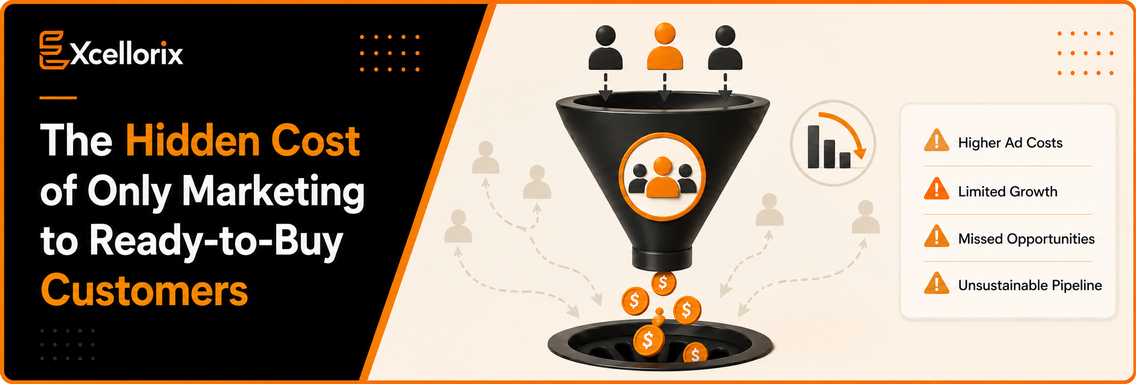
Most businesses love ready-to-buy customers. They’re easier to convert, easier to track, and easier to explain in a marketing report. Someone searches for a service, clicks an ad, visits your website, and fills out a form. The path feels straightforward. The results are measurable. The return on investment is easy to justify. Because of that, many companies build their marketing around people who are already looking for a solution.
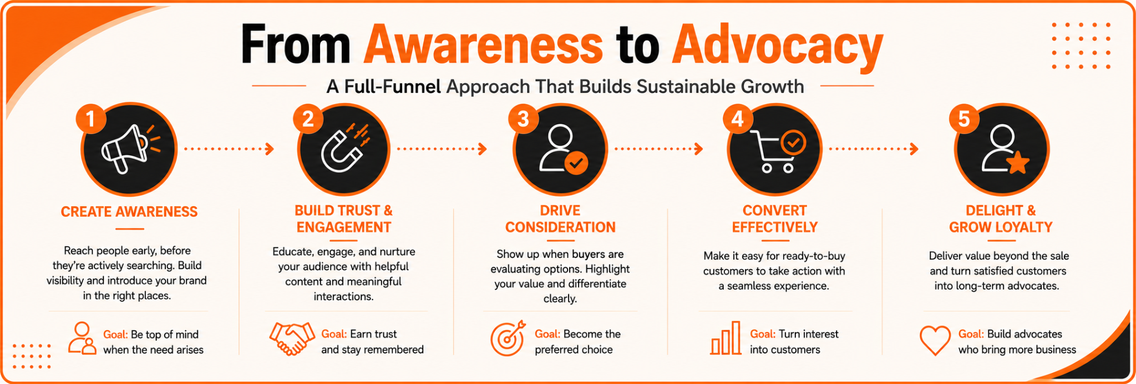
At first, it works. Leads come in. Sales happen. Revenue grows. The problem is that many businesses mistake short-term efficiency for long-term growth. Capturing existing demand and creating future demand are not the same thing. This is one reason more businesses are investing in a Google and Meta ads full funnel strategy. Instead of focusing only on prospects who are ready to buy today, they create visibility earlier, build familiarity over time, and stay connected with potential customers before competitors enter the conversation.
Businesses that ignore this often discover a frustrating reality. Their campaigns continue generating leads, yet growth becomes harder to achieve. Costs increase, competition becomes more aggressive, and every new customer seems more expensive to acquire than the last. The issue is rarely the ads themselves. The issue is that the business has become dependent on a limited pool of existing demand.
Why This Approach Feels Like the Smart Choice
If you’re investing money into marketing, it’s natural to focus on activities that generate immediate results. Most business owners care about revenue, not vanity metrics. They want leads. They want sales. They want measurable outcomes. That’s why conversion-focused marketing feels so attractive. The connection between effort and result is easy to see. Someone searches. Someone clicks. Someone converts.
The challenge is that customers don’t suddenly appear when they’re ready to buy. Long before they become a lead, they’re researching, comparing options, reading reviews, asking questions, and forming opinions about the companies they encounter. The businesses that stay visible throughout this process often have an advantage before the final buying decision is ever made.
A strong customer acquisition strategy recognizes that future buyers are just as important as current buyers. Instead of focusing only on immediate opportunities, it creates visibility among people who may not be ready to purchase today but could become customers tomorrow.
The Growth Problem Most Businesses Don't Notice
One of the most confusing situations for a growing business is seeing marketing continue to generate leads while growth begins slowing down.
At first, it doesn’t make sense. The campaigns are still running. Traffic is still coming to the website. The sales team is still receiving inquiries. So why does scaling become more difficult? The answer often has nothing to do with campaign performance. The business has simply reached the limits of the audience it has been targeting. When your marketing depends entirely on people actively searching for solutions today, your growth becomes tied to the size of that audience.
Once you’ve captured a significant portion of existing demand, additional growth becomes increasingly difficult. This is where many businesses hit an invisible ceiling. Everything appears to be working. Yet progress slows. Many companies facing this challenge discover that their marketing is heavily weighted toward conversion-stage activity.
They are capturing demand effectively but doing very little to influence future demand. Businesses that adopt a Google and Meta ads full funnel strategy often break through this ceiling because they stop relying exclusively on today’s buyers and start building relationships with tomorrow’s buyers as well.
The Risk of Renting Your Growth
A concept we often discuss with clients is the difference between renting growth and building growth. Many businesses spend years renting growth without realizing it. Every month they invest money into advertising platforms to access an audience that already exists. When spending continues, leads continue.
When spending stops, visibility disappears. Traffic declines. Opportunities shrink. The entire system depends on paying for access to buyers. There is nothing wrong with paid advertising. In fact, it can be one of the most effective growth tools available. The problem arises when it becomes the only source of growth. Businesses that continue growing year after year typically invest in assets that continue working long after the initial investment has been made.
That includes content, authority, trust, reputation, brand recognition, and professional SEO services that improve discoverability over time. These assets continue creating opportunities even when campaigns are not actively running. That’s the difference between renting growth and building growth.
What Happens When Demand Stops Growing
Every market has limits. There are only so many people actively searching for specific products and services at any given time. Many businesses discover this reality after years of relying heavily on conversion-focused marketing. They improve landing pages. Optimize campaigns. Test new messaging. Refine targeting. Yet growth remains difficult.
The reason is often simpler than expected. They’ve already captured most of the available demand. At that point, the challenge isn’t campaign performance. The challenge is market size. You cannot endlessly scale from the same audience. Eventually, businesses need to reach people before they actively enter the market.
That doesn’t mean abandoning conversion-focused advertising. It means supporting it with broader visibility efforts that create future opportunities. This is where a full funnel paid media strategy becomes valuable. Instead of relying solely on people who are actively searching today, businesses create awareness and familiarity that influence future purchasing decisions.
The Hidden Revenue You Never See
Most marketing reports focus on visible outcomes. Clicks. Leads. Calls. Sales. What they don’t show is the revenue that never entered your pipeline. Think about all the potential customers who:
- Never searched for your company
- Never clicked your ad
- Never visited your website
- Never requested a quote
Those people rarely appear in analytics reports. Yet many of them eventually become customers of another company. Why? Because they discovered that company earlier. They became familiar with the brand before entering the buying process. They trusted that company before actively comparing solutions. In many cases, those decisions are influenced by touchpoints that occur long before a purchase is made. This is why understanding the modern customer buying journey is so important.
People don’t suddenly wake up and become customers. Their decisions are shaped by multiple interactions over time. The businesses that remain visible during those interactions often have a significant advantage. This is where a Google and Meta ads full funnel approach creates value. Instead of appearing only when someone searches for a solution, businesses stay visible throughout the broader customer buying journey, creating more opportunities to build trust before a purchasing decision is made.
Why Familiarity Often Beats Better Marketing
Many business owners assume customers always choose the company with the best offer. In reality, familiarity plays a much bigger role than most people realize. People trust what they recognize. When buyers repeatedly encounter a business through articles, search results, recommendations, social media, and educational content, that business becomes familiar.
It feels established. It feels credible. It feels trustworthy. By the time a purchasing decision arrives, that familiarity can influence the outcome. This doesn’t necessarily mean the company has the lowest prices or the best service. It simply means they became recognizable before competitors did. Businesses that wait until prospects are ready to buy often miss the opportunity to build that familiarity.