


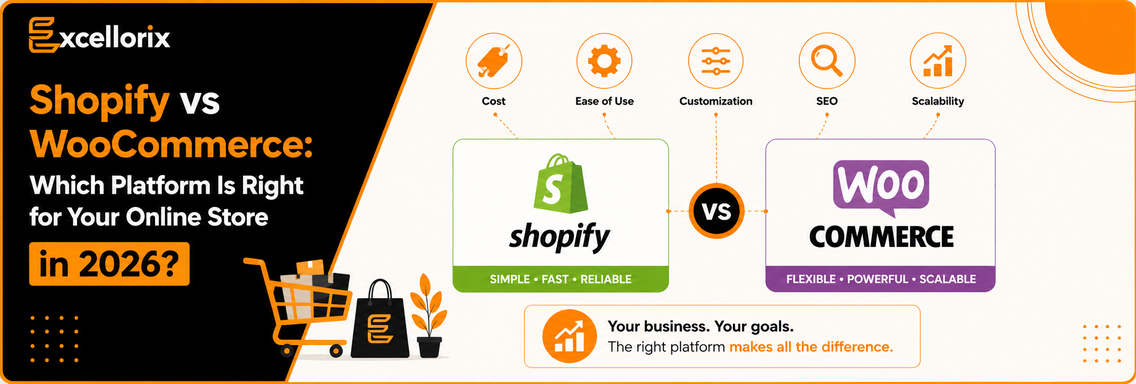
Choosing between Shopify vs WooCommerce for ecommerce used to feel much easier. Most businesses picked Shopify for convenience or WooCommerce for flexibility without thinking too much about long term growth.
In 2026, that decision matters far more. Ecommerce has changed quickly. AI powered shopping experiences, rising ad costs, faster customer expectations, and mobile first buying habits have reshaped how online stores grow. That is why the Shopify vs WooCommerce comparison matters more today than it did a few years ago. Businesses are no longer asking which platform is popular. They want to know which platform supports scalability, SEO performance, and long term growth.
For some brands, Shopify feels like the best ecommerce platform 2026 because it is simple and fast to launch. For others, WooCommerce offers more flexibility and ownership. The right choice depends on your business goals, budget, and technical comfort level. If you are deciding between Shopify or WooCommerce for small business ecommerce, understanding how both platforms work can help you avoid expensive mistakes later.
Modern ecommerce is more competitive than ever. Customers expect fast websites, smooth checkout experiences, mobile friendly browsing, and personalized recommendations. At the same time, businesses are spending more money on customer acquisition through Meta Ads and Google Ads. That means your ecommerce platform affects much more than design. It influences SEO, website speed, conversions, customer experience, and long term scalability.
Many businesses realize this too late. They choose a platform because it feels easier in the beginning, then struggle once the store starts growing. At Excellorix, we help ecommerce businesses with SEO services, ecommerce development, and conversion focused growth strategies designed for long term scalability.
Shopify remains one of the most popular ecommerce platforms because it is simple to use and beginner friendly. The platform handles hosting, security, updates, and much of the technical work automatically. That allows businesses to launch stores quickly without worrying about backend management.
For startups and small businesses, this convenience is a major advantage. Shopify also continues improving its AI tools, mobile shopping experience, and integrations, making it easier for brands to manage ecommerce operations efficiently. For businesses wanting speed and simplicity, Shopify still makes a lot of sense.
As businesses grow, Shopify can start feeling restrictive. Monthly costs increase through paid apps, transaction fees, premium themes, and subscriptions. Some brands also want deeper customization or stronger SEO flexibility than Shopify comfortably allows. It works well for straightforward ecommerce stores, but businesses with advanced requirements sometimes outgrow the platform.
That is one reason many scaling brands eventually start exploring WooCommerce.
WooCommerce gives businesses significantly more flexibility and ownership. Because it runs on WordPress, businesses gain stronger control over SEO structure, design customization, content marketing, and backend functionality. That flexibility makes WooCommerce attractive for businesses focused on long term organic growth and custom ecommerce experiences.
At Excellorix, we often recommend WooCommerce to brands investing heavily in SEO services because WordPress provides stronger technical SEO control and content management flexibility. For businesses wanting deeper customization and scalability, WooCommerce remains a strong option in 2026.
WooCommerce also requires more responsibility. Unlike Shopify, businesses must manage hosting, plugin updates, security, and performance optimization themselves. Beginners sometimes find this overwhelming initially.
Poor hosting or badly configured plugins can also affect website performance during high traffic periods.
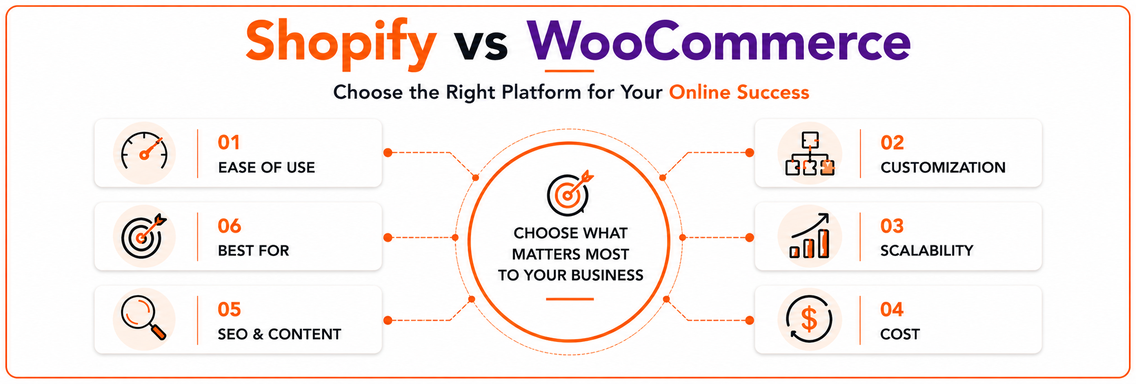
However, businesses that invest in proper setup and development support often build highly scalable ecommerce stores using WooCommerce. When looking at a Shopify vs WooCommerce comparison, the difference usually comes down to convenience versus flexibility.
Shopify is generally easier for beginners because most technical work is handled automatically. WooCommerce takes more setup initially but gives businesses much more customization and control over time.
In terms of pricing, Shopify uses a monthly subscription model with additional app costs. WooCommerce itself is free, although hosting and maintenance still require investment.
SEO is another major difference. Both platforms support ecommerce SEO, but WooCommerce usually gives businesses more technical flexibility because it runs on WordPress.
The best ecommerce platform 2026 depends less on trends and more on what your business actually needs.
The Shopify or WooCommerce for small business debate usually comes down to simplicity versus long term flexibility.
Choose Shopify if you want faster setup, lower technical involvement, and easier management.
Choose WooCommerce if SEO, scalability, customization, and long term control matter more to your business.
Many successful ecommerce brands eventually move toward WooCommerce once they become more focused on SEO and content driven growth.
The Shopify vs WooCommerce comparison is not about finding one perfect platform for everyone. It is about finding the right fit for your business goals. Shopify is excellent for businesses prioritizing simplicity and speed. WooCommerce is ideal for brands wanting flexibility, customization, and stronger SEO control. Both platforms can work extremely well when matched with the right business strategy.
At Excellorix, we help ecommerce businesses with SEO services, ecommerce development, and conversion focused strategies designed for sustainable growth.
Schedule a free consultation and discover which platform makes the most sense for your ecommerce business in 2026.
Shopify is better for businesses wanting an easier setup with minimal technical management. WooCommerce works better for businesses needing customization, SEO flexibility, and long term scalability.
Shopify uses a monthly subscription model with additional app and transaction costs. WooCommerce is free to install, but businesses still pay for hosting, plugins, and maintenance.
Shopify is usually easier for beginners because hosting, security, and updates are managed automatically. WooCommerce requires more setup but offers greater flexibility later.
WooCommerce is usually better for businesses needing advanced customization, stronger SEO capabilities, and more backend control.
Both platforms support ecommerce SEO, but WooCommerce generally provides more technical SEO flexibility because it runs on WordPress.
Yes. With proper hosting and optimization, WooCommerce can scale very effectively for growing ecommerce businesses.
Tell us about your goals—we’ll show you how Excellorix can help you get there.