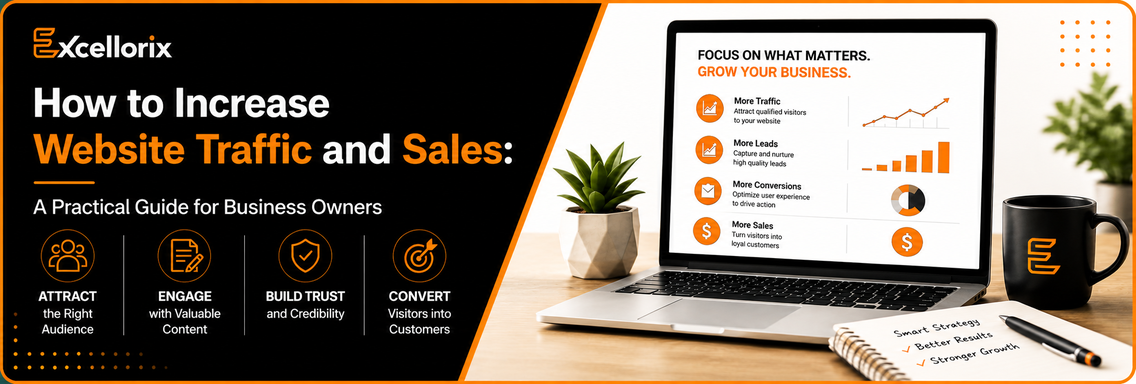
Every business owner wants more visitors, more leads, and more revenue. Yet many companies spend months trying to increase website traffic without seeing a meaningful increase in sales. Traffic reports look great, rankings improve, and website visits grow, but inquiries and conversions remain flat. At Excellorix, we see this challenge all the time. Businesses often focus on attracting more visitors while overlooking what happens after those visitors arrive. The result is a website that generates traffic but struggles to produce measurable business growth. The truth is simple. Traffic alone is not the goal.
The real goal is attracting the right audience, building trust, and creating an experience that encourages visitors to take action. If you are searching for how to increase website traffic and sales, you need a strategy that combines visibility, credibility, and conversion optimization.
Why More Traffic Does Not Always Lead to More Sales
One of the biggest misconceptions in digital marketing is that more traffic automatically means more revenue. Unfortunately, that is not always true. Imagine owning a store that attracts thousands of visitors every week. If most of those visitors are not interested in what you sell, your sales will remain unchanged.
The same principle applies online. Some visitors are researching. Others are casually browsing. Many may never become customers. This is why successful businesses focus on qualified traffic rather than simply increasing visitor numbers.
The objective is not just to attract more people. The objective is to attract people who already have a problem your business can solve. That process starts with understanding search intent.
Start With Search Intent
Before creating content or optimizing pages, it is important to understand why people are searching. This concept is known as search intent. Someone searching for educational information is at a different stage of the buying journey than someone searching for a service provider.
Many businesses focus on keywords with high search volume. However, traffic only becomes valuable when it comes from people who are genuinely interested in your products or services. When your content aligns with user intent, you attract visitors who are more likely to engage, inquire, and convert. Once you understand what your audience is looking for, the next step is creating content that provides real value.
Create Content That Provides Real Value
Search engines have become much better at identifying content that genuinely helps users. The most effective content is not necessarily the longest content. It is the content that answers questions, solves problems, and helps people make informed decisions. High quality content often includes:
- Practical advice
- Expert insights
- Real world examples
- Actionable recommendations
- Clear explanations
At Excellorix, we often encourage businesses to review the questions they answer every day. Those conversations can become valuable blog posts, guides, and resources that attract qualified visitors. When your content focuses on helping people instead of simply targeting keywords, it becomes more useful and more likely to perform well in search results. However, great content is only one piece of the puzzle. What happens after someone arrives on your website is equally important.
Improve Your Website Experience
Many businesses invest heavily in marketing while neglecting their website experience. A slow website, confusing navigation, or unclear messaging can prevent visitors from becoming customers.
Website Speed
Visitors expect websites to load quickly. Even a few seconds of delay can increase bounce rates and reduce conversions.
Mobile Optimization
Most website traffic now comes from mobile devices. Your website should provide a seamless experience across smartphones, tablets, and desktops.
Clear Messaging
Visitors should understand who you are, what you offer, and how you can help within seconds of arriving on your website.
Strong Calls to Action
Every page should guide users toward the next logical step. Whether that means requesting a quote, scheduling a consultation, or making a purchase, clear calls to action improve conversions.
These website traffic and conversion tips may seem simple, but they often have a significant impact on overall performance. Even with an excellent website experience, visitors still need confidence in your business before they commit.
Build Trust Before Asking for a Sale
Trust is one of the most important factors in online conversions. People want reassurance before sharing their information or making a purchase. Trust can be built through:
- Customer testimonials
- Online reviews
- Case studies
- Certifications
- Awards and recognitions
- Transparent business information
Case studies are particularly effective because they show real outcomes rather than making promises. When visitors see evidence that your business has delivered results for others, they feel more comfortable taking the next step. Even then, many visitors will not convert immediately. That is completely normal. The key is maintaining the relationship.
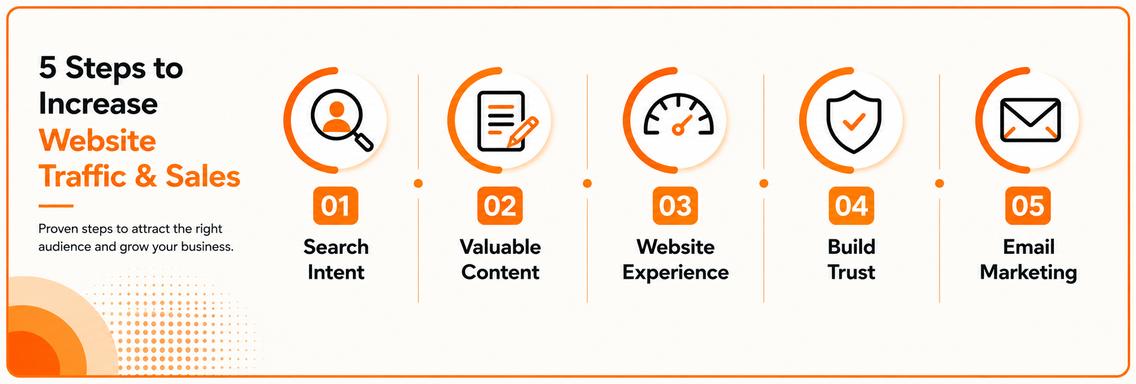
Use Email Marketing to Stay Connected
Most customers do not make a decision during their first website visit. They often compare options, gather information, and evaluate different providers before moving forward. This is where email marketing becomes valuable. Rather than losing contact with visitors after they leave your website, email marketing allows you to continue building trust over time.
Effective email campaigns may include:
- Educational content
- Industry insights
- Helpful resources
- Customer success stories
- Special promotions
Businesses that consistently nurture leads often drive more sales from website traffic without dramatically increasing their marketing budgets. The next step is determining whether your efforts are producing measurable results.
Track Metrics That Matter
Traffic numbers are important, but they should never be your only success metric. A website can generate thousands of visitors while contributing very little revenue. Instead, focus on metrics that directly impact business growth. These include:
- Leads generated
- Conversion rate
- Cost per lead
- Customer acquisition cost
- Revenue generated
- Return on investment
Tracking these metrics helps identify which strategies are working and which areas need improvement. With accurate data, businesses can make smarter marketing decisions and invest confidently in future growth.