

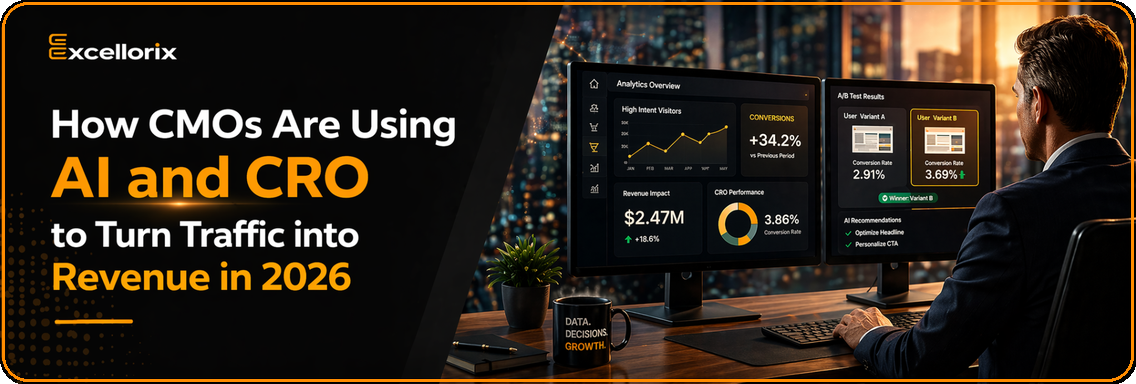
In 2026, getting traffic is no longer the biggest challenge for most businesses. With the right mix of ads and SEO, bringing visitors to your website is very achievable.
The real challenge begins after the click. Many CMOs are starting to realize that more traffic does not automatically mean more revenue. What matters is how well your website converts the visitors you already have. This shift in thinking is especially noticeable in competitive markets like Raleigh, where businesses are competing for the same audience. Instead of chasing more clicks, smart teams are focusing on making every visit count. That is where AI powered Conversion Rate Optimization is starting to play a much bigger role.
At Excellorix, we have seen businesses unlock significant growth simply by improving how their website responds to user behavior, without increasing their ad spend.
A lot of businesses are doing the right things on the surface. They invest in SEO. They run paid campaigns. Traffic steadily comes in. But when you look at the numbers more closely, most visitors leave without taking action. For many websites, conversion rates are still sitting around two to three percent. That means the majority of your traffic is not turning into leads or customers. The issue is usually not visibility. It is the experience people have once they land on your site.
Pages often feel too generic. The messaging does not match what the user was expecting. There is no clear direction on what to do next. And in many cases, there is little ongoing testing or improvement. This is where growth starts to stall. The teams that move past this stage are the ones that start focusing on how to adapt the experience in real time.
Instead of showing the same content to every visitor, AI allows your website to adjust based on how people behave. It looks at things like what users click on, how long they stay, and what they have interacted with before. Based on that, it changes what they see. This makes the experience feel more relevant.
A returning visitor might see a stronger offer. Someone visiting from a specific location might see messaging that speaks directly to them. A first time visitor might get a simpler, more guided experience. These changes may seem small, but they add up.
We have seen businesses improve conversions significantly just by aligning their content more closely with user intent. Even simple additions like quizzes or guided flows can help users find what they are looking for faster. Once you start improving the experience, the next step is understanding what your users are likely to do next.
Most teams already have access to a lot of data. The challenge is knowing how to use it effectively. Predictive analytics helps shift your approach from reacting to anticipating. Instead of only looking at what users did in the past, you can start identifying patterns that show what they are likely to do next. This includes spotting high intent users, identifying potential drop offs, and understanding which traffic sources bring the most value. This allows you to make smarter decisions with your budget and your strategy.
For example, instead of spreading your ad spend evenly, you can focus more on the segments that are more likely to convert. But even with better insights, many campaigns still struggle to deliver consistent results after the click. That is where the gap between paid traffic performance and on site experience becomes clear. If you are already investing in traffic but not seeing the returns you expect, it is often worth reviewing the full funnel instead of just the top of it.
Once you have insights, the next step is acting on them quickly. Traditional A/B testing can take a long time. You wait for enough data, analyze results, and then make changes. By that time, user behavior may have already shifted.
AI powered testing works differently. It continuously tests variations and automatically sends more traffic to the versions that perform better. Instead of waiting weeks, improvements start happening while the test is still running. This makes the entire process faster and more efficient.
At this point, many teams start to realize that the issue is not traffic volume. It is conversion efficiency. If you are not sure where your funnel is losing users, a focused CRO audit can help identify exactly where the drop offs are happening and what needs to be improved. Even with better performing pages, there is still one important moment that often gets overlooked.
Not every visitor converts on their first visit. Some people hesitate. Some get distracted. Others just need a little more information before making a decision. AI powered chatbots can help at these critical moments. Instead of showing generic messages, they respond based on user behavior. They can answer questions, guide users toward the right product or service, or offer a small incentive at the right time. When done well, this does not feel intrusive. It feels helpful.
Many businesses see a noticeable improvement in conversions simply by engaging users before they leave the site.
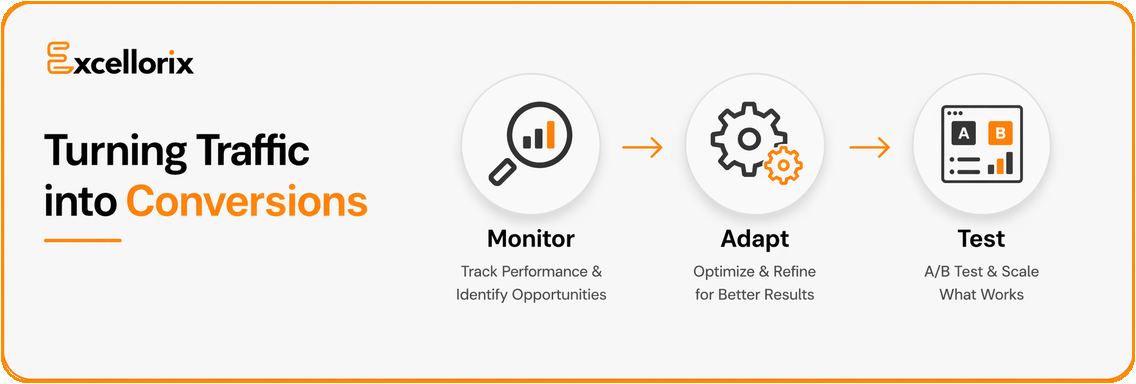
When you step back and look at all of this together, a clear pattern starts to form. Most successful teams are not trying to do everything at once. They focus on consistent improvements over time. They start by identifying where users drop off. They test small changes. They track how users interact with the site. And they build on what works. This approach may seem simple, but it is very effective.
We have seen businesses achieve strong growth by following this process, not by increasing traffic, but by improving how that traffic converts. But even the best optimization strategy depends on attracting the right audience in the first place.
CRO works best when it is supported by the right traffic sources. SEO services help bring in users who are actively searching for what you offer. This builds a strong foundation for long term growth. At the same time, paid campaigns can help you scale faster and test new opportunities.
However, without CRO, even high quality traffic can underperform. The real impact comes when everything works together. You attract the right audience, guide them with the right messaging, and continuously improve how they convert. Based on the feedback and results we have worked on at Excellorix, this combined approach is what consistently turns traffic into revenue.
Our focus is simple. We help businesses get more value from the traffic they already have. We do this through clear audits, practical AI integrations, ongoing testing, and transparent reporting. There is no unnecessary complexity. No guessing. Just a structured approach to improving conversions and driving measurable growth.
If your site is getting traffic but not delivering consistent leads or sales, the issue is rarely just one thing. It is usually a mix of targeting gaps, messaging issues, and missed conversion opportunities. AI driven CRO helps improve what happens after the click. SEO services ensure you are attracting the right audience. Together, they create a system that is focused on results, not just traffic.
When these elements work together, you stop relying on volume alone and start building a more predictable path to growth. If you are already investing in traffic but not seeing the returns you expect, it may be time to look beyond the top of the funnel and focus on what happens next.
Schedule a Free CRO Strategy Call with our Raleigh team and get a clear breakdown of what is holding your conversions back and how to turn your existing traffic into a reliable and scalable source of leads. It is a simple way to understand where you are losing potential revenue and what steps can help you improve performance in a meaningful way.
CMOs are using AI to continuously improve how users interact with their websites. Instead of relying on static pages, they focus on personalization, predictive insights, and real time optimization to improve conversions without increasing traffic.
Yes, many tools today are designed for smaller teams and do not require large budgets or complex setups. Businesses can start with simple improvements and gradually build a more advanced strategy over time.
Yes, most personalization strategies now rely on first party data such as user behavior and on site interactions. This makes them more reliable and aligned with privacy standards.
Some improvements can be seen within a few weeks, especially when using real time testing tools. The exact timeline depends on the traffic volume and how quickly changes are implemented.
Yes, SEO brings traffic to your site, but CRO ensures that traffic converts. Without it, you may miss out on potential leads and revenue even if your traffic numbers look strong.
Tell us about your goals—we’ll show you how Excellorix can help you get there.