Skip to content


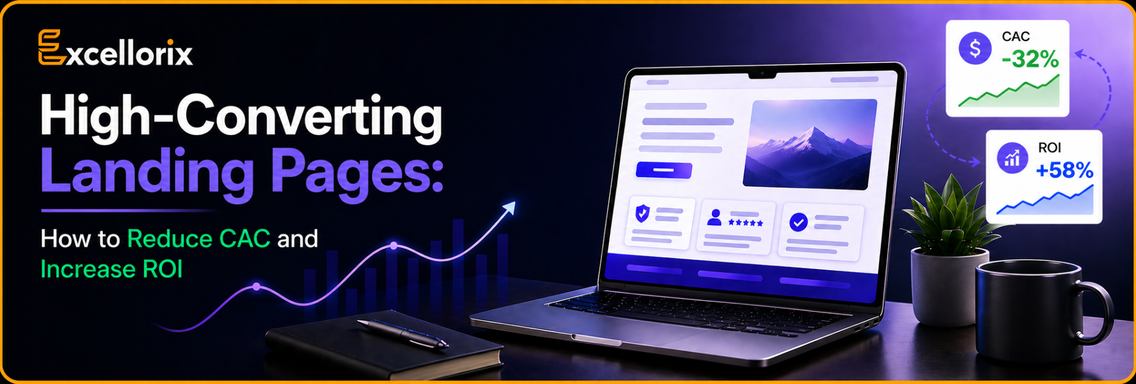
High-converting landing pages are no longer just a helpful marketing asset. In 2026, they have become one of the biggest factors that decide whether your paid campaigns succeed or fail. Many businesses think their biggest problem is traffic. They believe they need more clicks, more visitors, and bigger ad budgets. But in most cases, the real issue starts after the click. People arrive on the page, spend a few seconds looking around, and leave without taking action.
That is where customer acquisition cost begins to rise.
When your landing page does not convert, every campaign becomes more expensive. You spend more money to get the same result, and your return on investment keeps shrinking. This is why high-converting landing pages are directly connected to both CAC reduction and long-term revenue growth.
Older landing page strategies no longer work the way they once did. A generic form, a weak headline, and a basic layout are not enough anymore. Today’s users expect speed, clarity, trust, and relevance almost instantly. This is where landing page conversion optimization becomes essential. A strong landing page should not just look professional. It should guide the visitor toward one clear action while supporting your broader paid media and SEO service strategy.
Let’s start by understanding what actually makes a landing page convert in 2026.
What Makes Landing Pages Convert in 2026
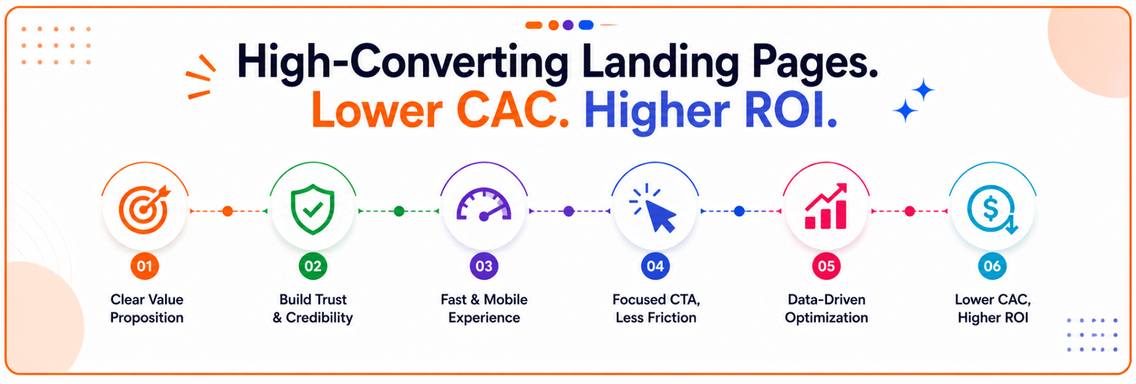
High-converting landing pages are built around one core idea: clarity. Visitors should immediately understand what you offer, why it matters, and what they should do next. If they feel confused or uncertain, conversions drop quickly. The best-performing pages usually include a strong hero section that captures attention fast, a clear and benefit-driven headline, trust builders like testimonials and reviews, one focused call to action, and a fast mobile-first experience.
Strong landing page design for lead generation also focuses on removing friction. Visitors should not have to search for answers or guess what happens next. Every section should move them closer to taking action. AI has also changed how landing pages perform. Many platforms now personalize content based on visitor behavior, traffic source, and intent. Someone coming from a Google Ads campaign may see a different message compared to someone arriving from an SEO service article. This makes the experience feel more relevant and helps reduce friction early in the customer journey.
Still, technology only works when the foundation is strong. If your message is weak or your tracking is broken, no automation can fix the real problem. Even though the formula sounds simple, many businesses still struggle to build pages that actually convert. The issue is rarely traffic alone. It is what happens after the click.
Why Most Landing Pages Still Underperform
A polished design does not guarantee conversions. Many brands invest heavily in paid campaigns but give very little attention to the landing page itself. This creates a major performance gap. Most underperforming landing pages have the same problems. They load too slowly, they overwhelm visitors with long paragraphs, they ask for too much information too early, and they fail to build trust. Weak headlines with no emotional hook make users scroll past. Missing testimonials or proof points create doubt. Too many choices create confusion. This is exactly where landing page conversion optimization becomes important. Without a clear structure and a strong user journey, even expensive traffic struggles to convert. When this happens, ad spend gets wasted quickly.
If your goal is to reduce CAC with landing pages, fixing these issues should always come first. Every unnecessary distraction increases customer acquisition cost and lowers ROI. Even the strongest campaigns struggle when the landing page does not match the promise made in the ad.
Once these common mistakes are identified, the next step is using smarter systems to improve performance. This is where AI starts changing the way landing pages work.
How AI Is Changing Landing Page Performance
AI is no longer just helping marketers write copy. It is now helping landing pages perform better in real time. Modern optimization tools study user behavior such as scrolling patterns, hover points, form abandonment, and exit intent. This helps marketers understand exactly where visitors lose interest. This makes landing page design for lead generation much smarter than before.
Instead of relying only on assumptions, businesses can now improve performance using real behavioral data.
Some of the most effective AI-driven improvements include dynamic headlines based on traffic source, personalized content sections for different audiences, predictive lead scoring from visitor behavior, smarter CTA placement, and automated A/B testing recommendations. These systems reduce guesswork and help businesses make faster decisions. But AI does not replace strategy.
A weak offer will still fail. A confusing message will still reduce conversions. Technology improves strong systems, but it cannot save broken ones.
Clean tracking and strong messaging still matter most. This is where businesses often see major improvements across both paid campaigns and SEO service performance. When the right systems are in place, even small optimization changes can create powerful results.
Where Landing Page Conversion Optimization Drives Real Results
Landing page optimization is rarely about one dramatic change. Most of the time, real growth comes from small improvements that remove friction and improve trust over time. This could mean shortening your forms, improving CTA placement, rewriting headlines to focus on benefits, strengthening your social proof, improving mobile speed, or adding exit-intent offers that recover lost leads. These small improvements create conversion-focused landing pages that work harder for every marketing channel and every ad dollar.
One Excellorix client in the B2B service industry was generating strong traffic but struggling with rising customer acquisition costs and poor lead quality. After improving landing page speed, simplifying the hero section, and restructuring the lead form, their CAC dropped by 28 percent within two months. Conversion rates improved without increasing ad spend. This is the real value of conversion-focused landing pages.
Better landing pages do not just improve conversions. They make every channel work harder and every marketing dollar go further. The next question becomes where to start, because trying to fix everything at once usually creates more confusion than progress.
What to Optimize First to Reduce CAC with Landing Pages
Many businesses make the mistake of changing too much too quickly. That usually leads to messy testing, unclear data, and wasted time. The smarter approach is to optimize in layers.
Start with speed and mobile experience. If your page loads slowly, visitors leave before they even read your message. Since most traffic now comes from mobile devices, mobile performance should always be the first priority.
Next, focus on your hero section and CTA clarity. Your first screen should answer three simple questions immediately.
What is this?
Why should I care?
What should I do next?
If those answers are unclear, the rest of the page becomes irrelevant.
Then focus on trust and proof elements. People trust proof more than promises. Testimonials, reviews, client logos, guarantees, and real case studies help remove hesitation and improve conversion confidence.
Once these basics are strong, testing becomes much more effective. This is the practical way to reduce CAC with landing pages because stronger foundations lead to stronger lead quality and less wasted ad spend. While technical improvements matter, conversions still depend heavily on how visitors feel when they land on the page. That is why design and copy remain the strongest conversion drivers.
Why Design and Copy Still Lead High-Converting Landing Pages
No amount of targeting can save weak messaging. High-converting landing pages succeed because they create clarity and emotional connection quickly. People make decisions fast, often within seconds. That means your copy must be simple, specific, and easy to trust.
The strongest landing page structure usually starts with a pain-focused headline, followed by a clear explanation of the solution, benefits instead of vague features, strong proof points, and one direct and confident CTA.
Good landing page design for lead generation is not about adding more sections. It is about creating a journey that feels natural and easy to follow. Design supports this by making the experience feel smooth and easy to follow. Good design removes confusion. Great copy creates action. Together, they build landing pages that support both short-term paid campaigns and long-term SEO service growth.
But even strong design and copy need one more thing to succeed: accurate tracking.
Why Tracking Matters to Increase ROI with Landing Pages
Without tracking, optimization becomes guesswork. AI tools can only improve what they can measure. If your data is incomplete, your decisions become unreliable. You need visibility across the full customer journey. From the ad click to the landing page visit, from lead submission to actual revenue, every step should be tracked properly. This helps identify where the real problem exists.
Sometimes traffic is not the issue. Sometimes the real problem is poor form quality, unclear offers, weak follow-up, or broken attribution. Once tracking is fixed, businesses often see immediate performance improvements. That is one of the fastest ways to increase ROI with landing pages because it helps teams stop spending blindly and start optimizing with confidence. With the right data in place, building a repeatable landing page system becomes much easier.
Your Landing Page Framework for Better Results
If you want consistent growth, follow a simple structure.
First, fix tracking. Make sure conversions are measured correctly across every important stage.
Second, build a clear reporting dashboard. Track leads, CAC, conversion rate, and ROI in one place so decisions become easier.
Third, test high-impact elements first. Focus on headlines, forms, CTAs, and trust-building sections before anything else.
Fourth, scale what works. Do not keep changing everything. Double down on what is already proving results.
Fifth, review performance weekly. Let the data guide decisions instead of assumptions.
This creates stronger and more predictable growth over time.
The good news is that most landing page problems are fixable with the right strategy. Small improvements often create the biggest business impact.
Final Thoughts
High-converting landing pages in 2026 are not about flashy design or endless automation. They are about clarity, trust, speed, and smart decision-making. The businesses winning today are the ones building systems that support both paid advertising and organic growth through a strong SEO service strategy. They test what matters, trust clean data, and improve the customer journey step by step.
At Excellorix, we help businesses create landing page conversion optimization strategies that drive better leads, stronger revenue, and long-term growth. If your traffic is strong but conversions are weak, the problem is often not your ads. It is the page after the click. That is where the real opportunity lives.
Schedule a Free Strategy Call
Most businesses do not actually have a traffic problem. They have a landing page problem that quietly increases CAC and reduces overall ROI. If your ads are bringing visitors but those visitors are not converting into qualified leads or customers, the issue is often not the campaign. It is what happens after the click.
Let’s take a closer look at what is holding performance back.
Book a free strategy call with Excellorix and find out
Why your landing pages are getting traffic but not enough conversions
How landing page conversion optimization can improve lead quality and reduce wasted ad spend
Where your forms, messaging, or user journey may be causing drop-offs
How high-converting landing pages can help reduce CAC with landing pages and improve customer acquisition efficiency
What kind of SEO service and CRO strategy can help you increase ROI with landing pages and drive stronger long-term growth
The goal is not just to bring more traffic. It is to turn your existing traffic into consistent revenue through smarter landing page strategy and better conversion systems.
If you are ready to turn more clicks into qualified leads and stronger revenue, this is where it begins.
FAQ
What are high-converting landing pages?
High-converting landing pages are designed to turn visitors into leads or customers by focusing on one clear action. Instead of giving too many options, they guide users toward a specific goal like filling out a form, booking a call, or making a purchase. Strong headlines, trust signals, fast loading speed, and clear CTAs all work together to improve conversions and business results.
How do you do landing page conversion optimization?
Landing page conversion optimization starts with improving the basics first. This includes page speed, mobile responsiveness, strong headlines, and clear call-to-action buttons. After that, businesses should test forms, images, CTA placement, and trust elements like reviews or case studies. Using A/B testing and proper tracking helps identify what is working and where improvements are needed.
Can landing pages reduce CAC?
Yes, strong landing pages can significantly reduce customer acquisition cost. When a page is clear, fast, and built for conversions, more visitors take action without requiring extra ad spend. This means businesses get better results from the same budget. High-converting landing pages help qualify leads faster, reduce bounce rates, and improve return on investment across campaigns.
What is the best landing page design for lead generation?
The best landing page design for lead generation is simple, focused, and mobile-friendly. It should have a strong hero section, one clear message, social proof like testimonials or reviews, and a short form that is easy to complete. Avoid too much text or multiple offers. A clean design helps visitors understand value quickly and improves conversions.
How do you increase ROI with landing pages?
To increase ROI with landing pages, businesses need to improve conversions while reducing wasted traffic. This means stronger messaging, better targeting, faster loading pages, and accurate tracking from click to conversion. Regularly testing headlines, forms, and CTAs helps improve performance over time. When landing pages work well, every visitor becomes more valuable.