


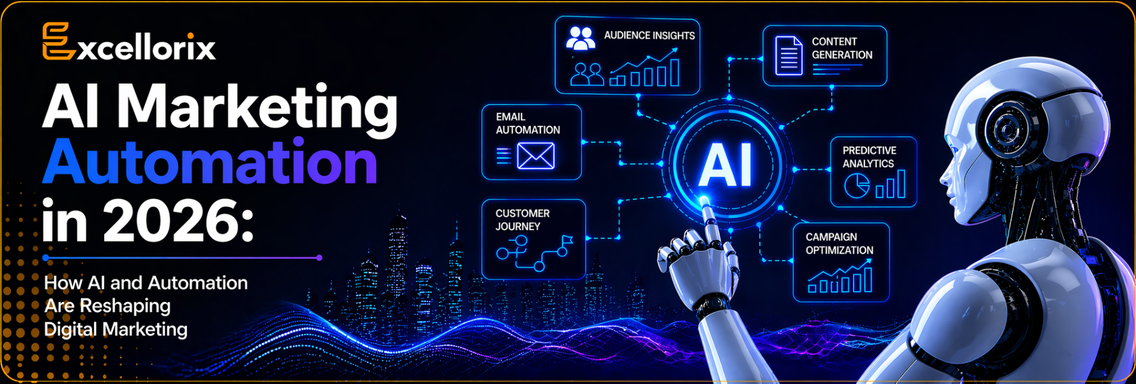
In 2026, AI marketing automation is no longer something marketers experiment with on the side. It has quietly become the foundation of how modern campaigns run.
What has really changed is not just the tools, but the way marketing itself works. There was a time when better results came from putting in more effort. More keywords, more bid adjustments, more manual testing. Today, that approach feels inefficient. The brands growing consistently are not doing more work. They are building better systems.
If your campaigns still depend heavily on manual changes or fixed strategies, it does not mean you are doing something wrong. It simply means you are working within a model that is evolving very quickly. To understand why this shift matters, it helps to look at what AI marketing automation actually means today.
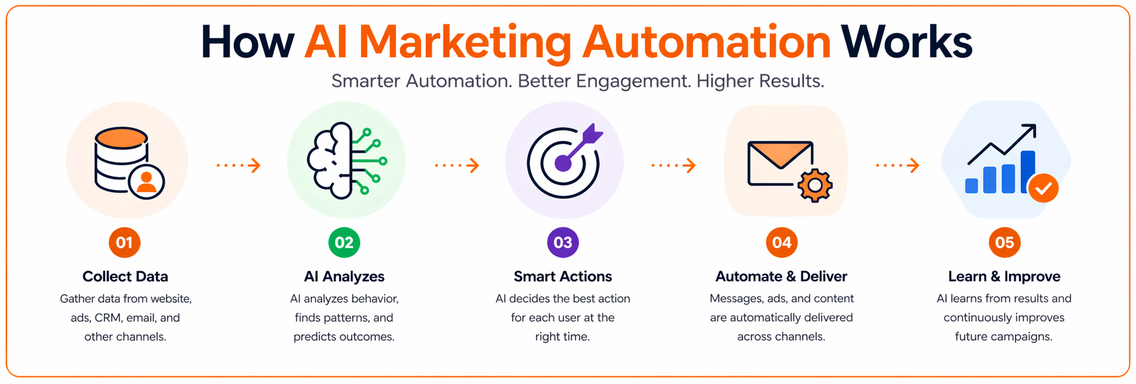
At its core, AI marketing automation is about using machine learning to manage and improve marketing without constant manual effort. But in 2026, it goes much further than basic automation. It is no longer about simple rules like sending an email after someone fills out a form. It is about systems that learn from performance and continuously improve over time.
These systems can understand which message works best for different audiences, adjust budgets in real time, test multiple variations automatically, and personalize experiences based on actual behavior. This is what separates traditional automation from true AI automation in digital marketing. One follows instructions. The other keeps refining them.
Once you understand this difference, it becomes easier to see why this shift is happening so quickly.
The rise of AI marketing automation is being driven by a few clear changes in the digital landscape.
First, data has become more complex. With privacy updates and the decline of third party tracking, marketers now rely more on first party data. AI helps turn that data into meaningful insights.
Second, customer expectations have changed. People expect relevance instantly. Generic campaigns are easier to ignore than ever. AI makes it possible to deliver personalized experiences without building everything manually.
Third, platforms themselves have evolved. Advertising tools are no longer designed for manual control. Their core systems are powered by machine learning, which means they perform better when you work with automation instead of against it.
So what does this actually look like in day to day marketing work? This is where AI marketing automation becomes more real.
AI is not something separate from your workflow. It is already shaping how everyday marketing tasks are handled.
Content and organic growth
AI helps marketers understand what people are actually searching for instead of relying on guesswork. It can identify content gaps, suggest relevant topics, and help structure content around real user intent. This is especially important as search continues to shift toward AI generated answers. Instead of focusing on producing more content, businesses are starting to focus on producing the right content.
Google Ads automation in 2026
One of the biggest shifts is happening in paid advertising. Google Ads automation in 2026 goes far beyond simple bid adjustments. The system evaluates multiple signals at once, including user intent, behavior, device, timing, and past interactions. This allows campaigns to adapt continuously instead of waiting for manual updates. AI for Google Ads optimization helps improve performance by adjusting bids based on likelihood to convert, testing different ad variations, and allocating budget more efficiently. While paid ads are evolving rapidly, the same level of intelligence is also shaping how brands communicate through email and CRM systems.
Email and CRM systems
Email marketing is no longer about sending scheduled messages to static lists. AI can now identify where a user is in their journey and respond accordingly. It can predict who is likely to convert, who needs more nurturing, and who might lose interest.
Messages adjust based on behavior instead of assumptions. This is where marketing stack automation becomes powerful. Instead of separate tools working independently, your entire system starts working together.
Looking at how AI is being used today gives a clear picture of where things are heading. Several marketing automation trends in 2026 are already shaping the future. AI is increasingly managing complete campaigns, including targeting, creatives, and budget decisions.
Creative production is becoming faster, with AI generating multiple variations without slowing down teams. Personalization is moving from reactive to predictive, where systems anticipate what users might need instead of just responding to past actions. Search behavior is also changing. With more zero click results and AI generated summaries, content needs to be clear and structured to remain visible.
Understanding these trends is helpful, but the real value comes from applying them in a practical way.
Building an AI driven system does not require a complete overhaul. It starts with clarity. Begin with a specific goal, such as improving conversions or reducing acquisition costs. Then review your current tools. Most businesses already have access to automation features but are not using them fully.
From there, focus on connecting your data so different platforms can share insights. Start with one or two workflows instead of trying to automate everything at once. As you see results, you can expand gradually. The goal is not to create complexity, but to build a system that works smoothly.
When implemented correctly, AI marketing automation makes a noticeable difference.
It reduces time spent on repetitive tasks, allowing teams to focus more on strategy.
It improves targeting by identifying patterns that are difficult to detect manually.
It speeds up testing, which leads to faster improvements in performance.
As campaigns scale, it also helps maintain consistency instead of adding more complexity.
Marketing today is no longer about managing individual channels separately. It is about how well everything works together. AI marketing automation is what makes that possible. It helps campaigns adapt in real time, improves how decisions are made, and removes the need for constant manual adjustments. But the real advantage comes from how it connects your entire system.
AI automation in digital marketing shapes how you attract attention.
Google Ads automation in 2026 helps you capture that attention effectively.
AI for Google Ads optimization ensures your performance keeps improving.
Marketing stack automation brings everything together so your efforts do not stay disconnected.
When these elements work in sync, marketing becomes more predictable, more efficient, and easier to scale. That is the real shift happening in 2026.
The brands that are growing consistently are not chasing every new tactic. They are building systems that learn, adapt, and improve over time.
Schedule a free strategy call with our Excellorix team and discover
What is holding your current performance back
Where your campaigns can improve with better automation
How to build a scalable AI driven marketing system tailored to your business
Because growth today is not about doing more work. It is about building better systems.
AI marketing automation uses artificial intelligence to manage and improve marketing campaigns automatically. It analyzes data, learns from user behavior, and adjusts targeting, messaging, and budgets without constant manual effort.
AI automation in digital marketing is used to track behavior, predict outcomes, and optimize campaigns in real time. It supports ad targeting, email personalization, and content recommendations, helping marketers make faster and better decisions.
Yes, for most businesses it is highly valuable. It helps reduce wasted spend, improves efficiency, and allows campaigns to scale without increasing workload. The key is setting it up with clear goals and reliable data.
AI for Google Ads optimization uses multiple data signals to adjust bids, audiences, and creatives automatically. This allows campaigns to respond quickly to changes and often leads to better performance compared to manual adjustments.
Yes, many platforms offer built in AI features that are accessible for smaller budgets. Businesses can start with areas like Google Ads or email automation and expand as they grow.
The main risks include over reliance on automation, poor data quality, and lack of oversight. Regular monitoring is important to ensure campaigns stay aligned with business goals.
Tell us about your goals—we’ll show you how Excellorix can help you get there.