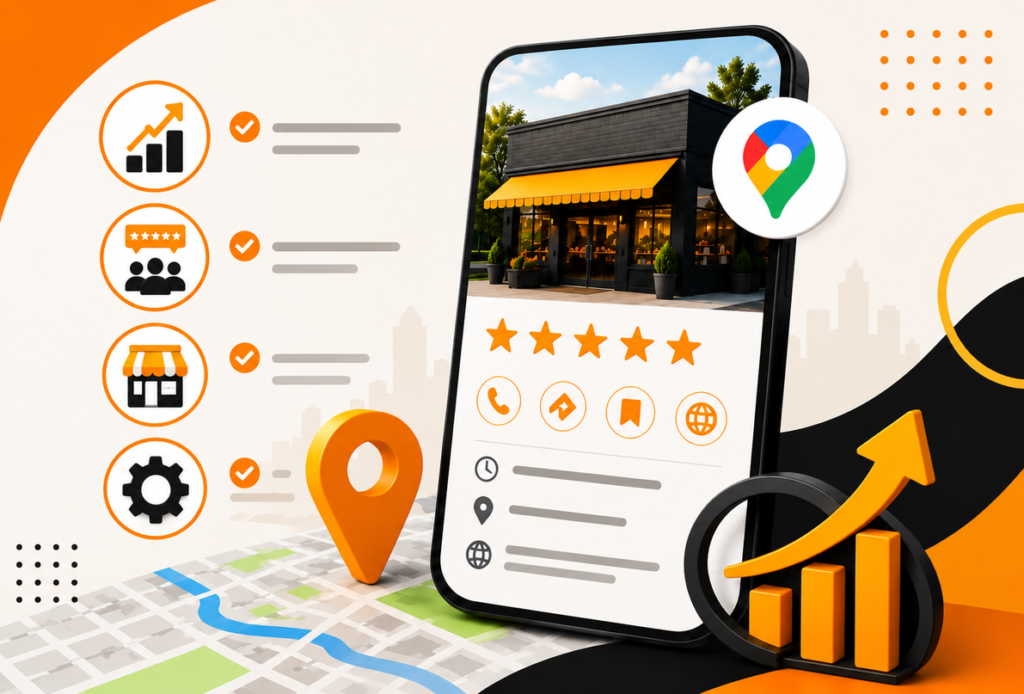

If you’re building a local SEO checklist for small business growth, you’re probably focused on your website, social media, or advertising campaigns. Those marketing channels matter. But there’s another asset that many business owners overlook, even though it often influences purchasing decisions before a customer ever visits a website. Your Google Business Profile. Think about your own search habits. When you need a local service, do you immediately visit multiple websites? Probably not. Most people search on Google, compare ratings, read reviews, browse photos, and check business hours before making a decision. In many cases, customers call directly from the search results. That’s why your Google Business Profile is often your real first impression. And if that first impression isn’t strong, potential customers may move on to a competitor before learning anything about your business.
Why Google Business Profile Matters More Than Ever
Local search has changed significantly over the last few years. Google wants users to find answers quickly. Instead of sending people through multiple websites, it often displays local businesses directly in search results and Google Maps. For small businesses, this creates a huge opportunity. A well-maintained profile can help you compete against larger companies without needing a massive advertising budget. That’s why Google Business Profile optimization has become one of the most important parts of local SEO. For businesses following a local SEO checklist for small business, improving a Google Business Profile is often one of the fastest ways to increase local visibility.
The Problem Most Businesses Don't Realize
One of the most common issues we see when working with businesses that invest in SEO services is an outdated Google Business Profile. Their website has been updated. Their advertising campaigns are running.
Their social media pages are active. But their Google Business Profile hasn’t been touched in years. The business may have expanded services, hired new team members, or changed operating hours. Yet the profile still reflects old information. We’ve seen businesses spend thousands on marketing while their Google listing displayed incorrect hours and outdated services. In several cases, fixing those issues produced results faster than launching another campaign. The challenge is that business owners often assume visibility problems are caused by their website. Sometimes the issue is much simpler. Google and potential customers are looking at information that no longer represents the business accurately.
How Google Decides Which Businesses Rank Higher
Many business owners wonder why certain companies consistently appear in Google Maps while others struggle to gain visibility. The answer comes down to several important local search ranking factors.
Relevance
Google wants to match users with businesses that provide exactly what they’re searching for. The clearer your profile is about your services, the easier it becomes for Google to understand your business.
Distance
Google considers how close a business is to the searcher. While you can’t control your location, you can ensure your service areas and contact information are accurate.
Prominence
Prominence refers to how trustworthy and established your business appears online.
Google evaluates signals such as:
- Customer reviews
- Ratings
- Profile completeness
- Website authority
- Customer engagement
- Local mentions
The stronger these signals become, the more confidence Google has in recommending your business. Understanding these local search ranking factors is important because they directly impact how often your business appears in front of potential customers. The good news is that many of these signals can be improved through consistent updates and ongoing Google Business Profile optimization.
A Simple Local SEO Checklist for Small Business Owners
Many businesses make local SEO more complicated than it needs to be. In reality, success often comes from consistently doing the fundamentals well. Here is a practical local SEO checklist for small business owners.
Claim and Verify Your Profile
Verification confirms that you’re the legitimate owner of the business. Without verification, you’re limiting your profile’s potential from the start.
Complete Every Section
Many profiles are missing important information.
Make sure you add:
- Services
- Products
- Business description
- Contact details
- Business hours
- Service areas
A complete profile creates stronger trust signals.
Upload New Photos Regularly
Customers want to see an active business. Recent photos help build trust and improve engagement.
Consider uploading:
- Team photos
- Project photos
- Product photos
- Office images
- Before-and-after examples
Authentic photos usually outperform stock photography.
Generate Reviews Consistently
Reviews remain one of the strongest local ranking signals. The goal isn’t collecting dozens of reviews in a single week. The goal is creating a steady flow of genuine customer feedback.
Respond to Every Review
Many business owners overlook this step. Customers aren’t the only people reading reviews. Google pays attention too. When customers consistently mention your services, expertise, and customer experience, Google gains a better understanding of your business. That’s one reason review management is often included in professional SEO services.
Keep Information Updated
Business hours, services, phone numbers, and locations should always be accurate. Even small inconsistencies can create confusion and reduce trust. Once your profile is optimized, the next step is strengthening the signals around it.
Local SEO Tips That Deliver Long-Term Results
The internet is full of marketing shortcuts. Most disappear as quickly as they appear. The best local SEO tips are usually the simplest ones.
Create Service-Specific Content
Dedicated service pages help search engines understand exactly what your business offers. They also give potential customers more useful information.
Build Local Authority
Get involved in your community. Support local events. Partner with local organizations. These activities often lead to valuable mentions and backlinks.
Maintain Consistent Business Information
Your business name, address, and phone number should be consistent across every online platform. Consistency builds trust.
Use Real Customer Experiences
Testimonials, reviews, customer photos, and case studies often build more credibility than polished marketing messages. In fact, many effective local SEO tips focus on improving trust rather than chasing rankings.

Why Reviews Matter More Than Ever in 2026
Reviews have become much more than online recommendations. They help Google understand customer experiences. Review content often highlights:
- Service quality
- Customer satisfaction
- Professionalism
- Expertise
- Product experiences
One local contractor we worked with saw a noticeable increase in calls after implementing a simple review request process. There was no complicated strategy. No expensive software. The business simply made asking for reviews part of its customer experience. Over time, those reviews helped improve visibility and trust.
Why Many Businesses Struggle With Local SEO
Here’s the interesting part. Most businesses don’t struggle with local SEO because it’s difficult. They struggle because consistency is easy to postpone. A customer issue appears. A project deadline arrives. A new priority takes over. Local SEO gets pushed aside. Meanwhile, competitors continue updating profiles, responding to reviews, and engaging with customers. Google rewards businesses that stay active. That doesn’t mean posting every day. It means keeping information accurate and showing consistent engagement over time. The good news is that local SEO doesn’t require a massive budget.
It requires a process. That’s one reason many businesses partner with providers offering SEO services. It helps ensure these important activities continue even when internal teams are focused elsewhere.