Skip to content


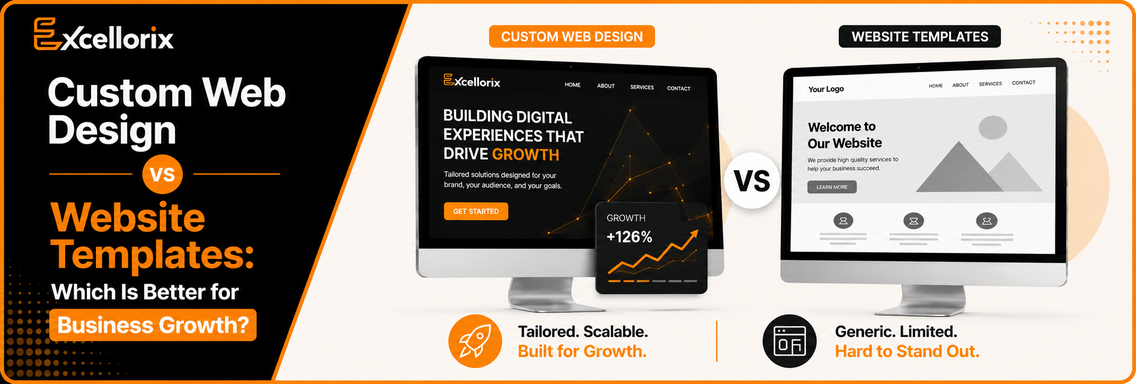
When businesses start planning a new website, one question almost always comes up. Should you invest in custom web design services or use a website template? At first glance, templates seem like the obvious choice. They are affordable, quick to launch, and often come with polished designs that look professional right out of the box. For many business owners, that sounds like an easy decision. Why spend more money on a custom website when a template can get you online in a few days? The answer lies in what happens after launch. A website is no longer just an online brochure. It is often your first salesperson, your lead generation tool, and the place where potential customers decide whether they trust your business. That means the debate between website templates vs custom websites is about much more than design. It is about choosing the solution that will support your growth, improve conversions, and strengthen your brand over time. Let’s look at both options and see which one makes the most sense for your business.
What Is a Website Template?
A website template is a pre designed website layout that allows businesses to launch quickly without building everything from scratch. Platforms such as WordPress, Shopify, Squarespace, and Webflow offer thousands of templates that can be customized with your content, images, and branding. Templates are popular because they offer:
- Lower upfront costs
- Faster launch times
- Easier setup
- Ready made designs
For startups and small businesses, these benefits can be very attractive. However, templates are built for a broad audience. They are designed to work reasonably well for thousands of businesses rather than perfectly for one specific company. At first, that may not seem like a problem. But as your business grows and your marketing becomes more sophisticated, those limitations often become more noticeable. This is usually when businesses begin exploring custom website design.
What Is Custom Website Design?
Custom website design is built specifically around your business, your customers, and your goals. Instead of starting with a pre built layout, designers and developers create a website tailored to your brand identity and customer journey. Every page, feature, and design decision serves a purpose. A custom website can be designed to:
- Improve lead generation
- Increase conversions
- Support SEO growth
- Strengthen branding
- Scale as your business grows
Think of it like buying a suit. A suit off the rack may fit reasonably well. A tailored suit is created specifically for you.
Websites work the same way. Templates are built for everyone. Custom websites are built for your business. That difference may seem small in the beginning, but it becomes much more important once you start investing in marketing, SEO, and lead generation.
Website Templates vs Custom Websites: Looking Beyond Launch Day
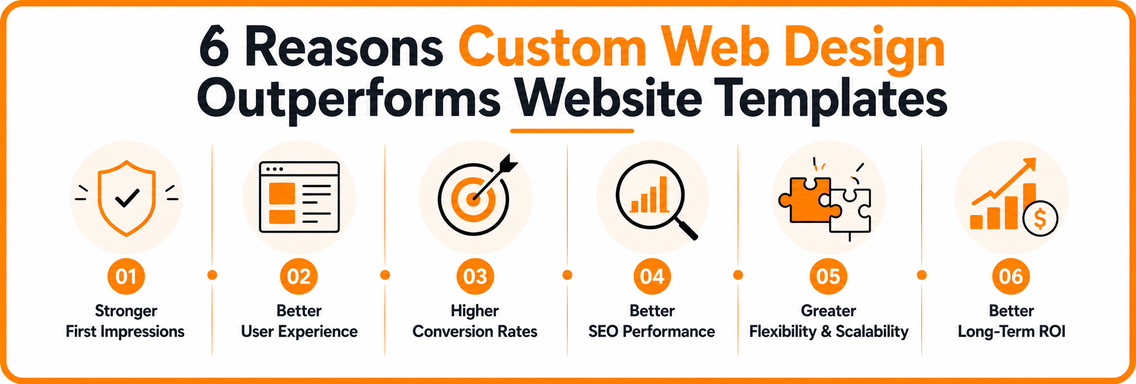
Many businesses compare websites based on price and launch speed. While those factors matter, they only tell part of the story. The real difference appears after the website goes live. As businesses grow, customer expectations increase. Competition becomes stronger. Marketing campaigns become more advanced. A website that felt perfect on day one may eventually start limiting your growth. This is where custom web design services often begin creating a measurable advantage. But where does that advantage actually come from? In most cases, it starts with how visitors perceive and interact with your website from the moment they arrive.
Why First Impressions Impact Business Growth
People form opinions quickly online. Research consistently shows that visitors decide whether they trust a website within seconds. If a website looks outdated, feels generic, or is difficult to navigate, visitors may leave before learning what your business offers. A professionally designed website immediately communicates credibility. This is one reason growing businesses invest in professional web design instead of relying entirely on templates.
A strong first impression does not guarantee a sale. However, a poor first impression can absolutely prevent one. Of course, attracting attention is only the first step. Once visitors decide to stay on your website, their experience becomes the next factor that influences whether they become customers.
How Custom Website Design Improves User Experience
Most business owners focus on design. Customers focus on convenience. They want information that is easy to find. They want pages that load quickly. They want a website that feels intuitive and simple to use. When visitors struggle to find what they need, frustration takes over. And frustrated visitors rarely become customers. One of the biggest advantages of custom website design is the ability to create a user experience based on how your customers actually browse, research, and make purchasing decisions. Templates can support some of this functionality. However, they often force businesses to work within predefined layouts and restrictions. Custom websites provide greater flexibility, which often results in better engagement and stronger conversion rates. And when we talk about conversions, we are really talking about what most businesses care about. Generating leads and sales.
The Lead Generation Advantage
Traffic is important. But traffic alone does not grow a business. Conversions do. A website can attract thousands of visitors each month. If nobody fills out a form, requests a quote, books a consultation, or makes a purchase, that traffic has very little value. This is where custom web design services often create a significant advantage. Every element can be designed around specific business goals.
This includes:
- Call to action placement
- Contact forms
- Landing pages
- Navigation paths
- Trust building content
Instead of forcing your sales process to fit a template, a custom website is built around how your customers make decisions. That can have a measurable impact on lead generation performance. However, even the best converting website cannot generate leads if potential customers never find it. That brings us to SEO.
Custom Websites vs Templates: Which Is Better for SEO?
SEO has changed dramatically over the past few years. Businesses are no longer competing only for traditional Google rankings. Today, they are also competing for visibility in Google AI Overviews, ChatGPT recommendations, voice search, and AI powered search experiences. When comparing website templates vs custom websites, SEO flexibility is often one of the biggest deciding factors.
Template SEO Limitations
Many templates contain unnecessary code, extra functionality, and features that can affect performance. Some also limit technical customization options. As SEO strategies become more advanced, these limitations can become frustrating.
Custom Website SEO Advantages
Custom websites provide greater control over:
- Site speed
- Mobile performance
- Internal linking
- Site architecture
- Schema markup
- Content organization
These factors help create a stronger foundation for long term SEO success. Businesses investing in SEO services often find that custom web design services make future optimization easier and more effective.