Skip to content



If you searched “how much does a website cost 2026,” chances are you already found completely different answers online. One agency says $2,000. Another quotes $25,000 without blinking. Then someone on social media promises a “fully custom business website” for the price of a weekend dinner and coffee. At that point, most business owners stop comparing pricing and start trying to figure out who is actually being realistic. And honestly, the confusion makes sense.
Website pricing in 2026 varies massively because businesses now expect websites to do far more than simply exist online. Some companies only need a simple online presence. Others need a website that can generate leads, rank on Google, support SEO growth, improve conversions, automate customer journeys, and integrate with multiple systems. Those are completely different projects. That is why website design cost can vary so dramatically from one business to another.
The bigger problem is that many businesses still focus only on launch cost.
Not visibility.
Not performance.
Not customer experience.
Not long term growth.
And that usually becomes far more expensive later.
A cheap website that loads slowly, struggles on mobile devices, ranks poorly, and fails to generate leads is not actually saving money. It is simply delaying the real investment until the business eventually has to rebuild everything properly.
In 2026, a website is no longer just a digital brochure. It has quietly become one of the most important business assets a company owns. For many businesses, the website now acts as a sales system, trust builder, SEO asset, lead generation platform, and customer experience hub all at the same time. That is why understanding web design pricing 2026 matters before making any investment decision.
Realistic Website Pricing Ranges in 2026
One reason website pricing feels confusing is because businesses often compare completely different projects side by side. A simple local business website is very different from a high performance ecommerce platform with custom functionality and automation systems. That is also why businesses searching for how much to build a website often receive wildly different answers depending on who they ask.
A basic DIY website builder may cost anywhere between $500 and $2,000. Freelancer websites usually range between $2,000 and $8,000 depending on experience and complexity. Small agencies often charge between $5,000 and $20,000 for growth focused websites with stronger strategy and optimization. Ecommerce websites can range from $8,000 to well over $50,000 once advanced functionality, subscriptions, integrations, and automation are involved.
Enterprise level websites with complex systems and custom infrastructure can easily exceed six figures. At first glance, those ranges feel dramatic. And naturally, somebody will always say:
“My cousin built our website for $400.”
That may even be true. But putting pages online is not the same as building a website that actively helps a business grow. That difference matters more than ever now.
A modern website should help attract traffic, build trust, improve conversions, and support long term scalability. Otherwise, the website simply exists without contributing much to the business itself.
What Actually Impacts Website Design Cost?
A lot of agencies throw pricing around without clearly explaining what businesses are actually paying for. That is usually where confusion starts. When most people hear the word “website,” they imagine homepage visuals and design layouts. In reality, design is only one piece of the puzzle. Several major factors influence website design cost, and one of the biggest is complexity.
At Excellorix, we often see businesses underestimate how much planning, SEO structure, and technical setup influence long term website performance. A website can look visually polished while still struggling badly with visibility, mobile usability, and lead generation if the foundation is weak. That is one reason pricing varies so heavily between projects.
How Website Complexity Affects Pricing
A simple five page service website is relatively straightforward to build. A custom ecommerce platform with subscriptions, customer dashboards, automation workflows, payment systems, advanced product filtering, and CRM integrations is a completely different situation. The more functionality your business requires, the more planning, development, testing, and optimization become involved.
Interestingly, many projects begin exactly the same way. “We only need something simple.” A few meetings later, the project suddenly includes multilingual support, AI chat systems, appointment booking, custom calculators, automation workflows, and client portals. That happens constantly because businesses quickly realize how much modern websites are expected to handle now. And as functionality increases, pricing naturally changes too.
Custom Website Design vs Templates: What Costs More?
Template websites are cheaper because the design structure already exists. Custom websites cost more because they are designed specifically around your business goals, branding, customer behavior, and conversion strategy. Templates can absolutely work for startups and smaller businesses in the beginning. But over time, many businesses realize their website looks almost identical to competitors using the exact same themes and layouts. That becomes a problem when potential customers compare businesses online within seconds.
Custom websites create stronger user experiences because they are built specifically for the business itself rather than for a generic audience. But in 2026, visuals alone are not enough anymore. A website can look impressive and still perform terribly online. That is where SEO and technical optimization become critical.
Why SEO and AI Optimization Increase Website Costs
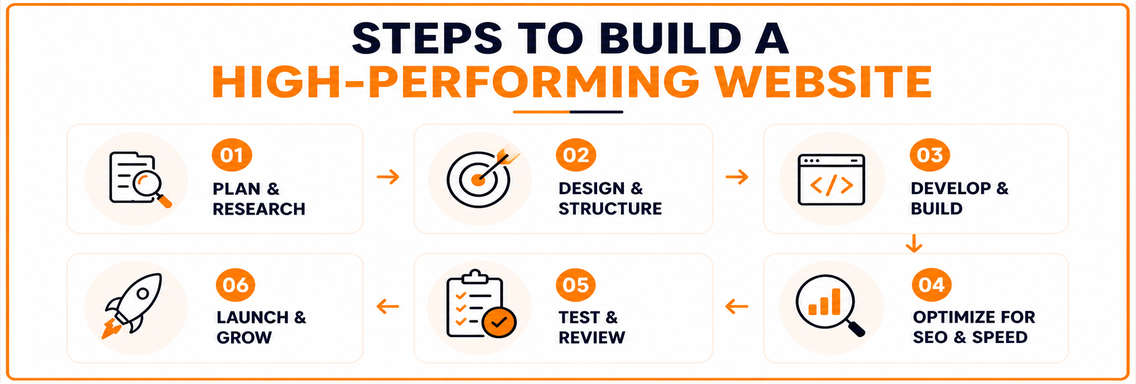
Websites today are not built only for human visitors anymore. They are also built for Google AI Overviews, ChatGPT recommendations, Bing Copilot, voice search systems, and AI powered search experiences. That shift has changed web design pricing 2026 significantly because websites now require stronger technical foundations. Modern websites need proper content structure, internal linking, schema markup, mobile optimization, fast loading speeds, and technical SEO setup from the beginning. Without these elements, even beautiful websites can struggle to gain visibility online. That is one reason professional SEO services are becoming a core part of modern web design instead of an optional add on later.
At Excellorix, many businesses approach us after launching cheaper websites that looked polished visually but failed to generate meaningful traffic or leads because SEO was never properly integrated from the start.
Why Mobile Performance Matters for Modern Websites
In 2026, mobile experience directly impacts trust, engagement, and conversions. Visitors expect websites to load quickly and function smoothly across every device. If a website feels slow or frustrating, most users leave almost immediately. That is why high performing websites prioritize mobile first design, fast loading speeds, simple navigation, accessibility, and conversion focused layouts.
A visually attractive website without usability does not help the business grow. Good design should simplify the customer journey, reduce friction, and guide users naturally toward taking action.
DIY Website Builders vs Agencies: Which Is Better?
Platforms like Wix, Shopify, and Squarespace have improved significantly over the last few years. For smaller businesses, they can absolutely work. But there is usually a tradeoff.
DIY website builders often limit customization, advanced SEO flexibility, scalability, and deeper integrations. At first, those limitations may not feel important. But as businesses grow, they become far more noticeable.
Agencies cost more because they usually provide strategy alongside development. That often includes SEO setup, analytics tracking, conversion optimization, scalability planning, performance improvements, and custom functionality. And honestly, many businesses eventually move to agencies after trying cheaper solutions first. Not because the website looked terrible. But because it was not helping the business grow. Traffic stayed low. Leads remained inconsistent. Conversions struggled. That is the real difference between simply owning a website and having a website that functions as a real business asset.
Why SEO Services Matter More Than Ever in 2026
Launching a website without SEO planning in 2026 is similar to opening a store in the middle of nowhere and hoping customers somehow discover it naturally. Professional SEO services help businesses improve organic visibility, search rankings, AI Overview visibility, local SEO performance, and long term traffic growth.
The earlier SEO is integrated into the website process, the stronger the long term results usually become. Because even the best looking website has limited value if nobody can actually find it.
Final Thoughts on Website Design Cost in 2026
The answer to “how much does a website cost 2026” depends far more on business goals than page count alone. A website today is not just a design project. It is part marketing system, part SEO asset, part lead generation platform, part trust builder, and part sales tool. That is exactly why website design cost varies so much.
Businesses focused on long term growth usually stop looking for the cheapest possible option and start investing in websites designed to support visibility, conversions, scalability, and performance properly. Because in 2026, the real cost is often not overpaying for a website. It is underinvesting in one that never performs properly in the first place.
At Excellorix, we help businesses create websites built not only for modern design but also for SEO growth, lead generation, and long term scalability. If you are currently evaluating how much to build a website for your business, scheduling a strategy call with Excellorix can help you understand the right direction before making an investment.
FAQ
How much does a website cost in 2026 for a small business?
Most small business websites in 2026 typically range between $2,000 and $15,000 depending on customization, SEO setup, integrations, functionality, and long term growth requirements.
Does SEO increase website design cost?
Yes. Proper SEO implementation requires technical optimization, keyword planning, internal linking, schema setup, content structure, and mobile optimization. While it can increase initial pricing, it usually improves long term visibility and traffic significantly.
Why do cheap websites usually fail?
Cheap websites often cut corners on SEO, mobile performance, speed optimization, user experience, and conversion strategy. They may look visually acceptable but struggle to generate meaningful business results.