PPC has changed more in the last few years than it did in the entire decade before that. Not long ago, running ads meant being inside your account all the time. Marketers were constantly adjusting bids, testing keywords, refining audiences, and checking performance repeatedly throughout the day. Everything depended on manual effort and constant attention. That approach used to work well. It does not anymore.
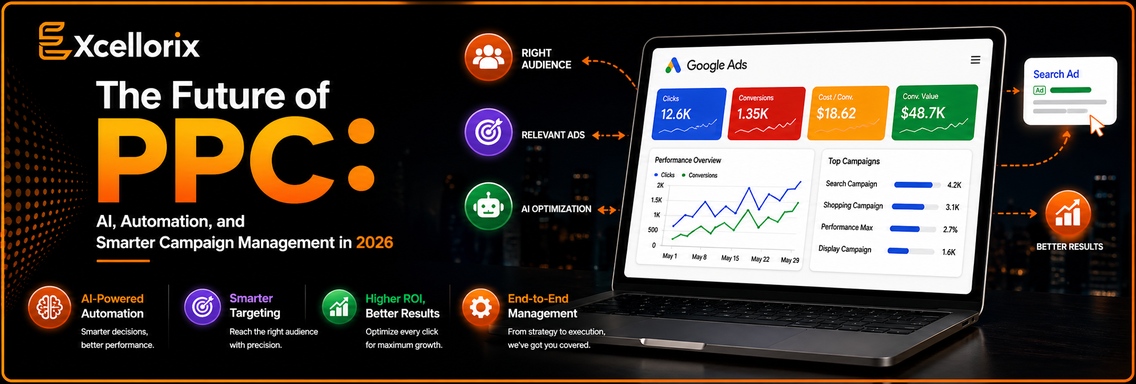
In 2026, PPC automation has become the backbone of modern advertising. Platforms like Google Ads now rely heavily on artificial intelligence to decide who sees your ads, how budgets are distributed, and which creatives are most likely to convert. This is the core of how AI-powered paid advertising now operates at scale. Because of this shift, the role of marketers has changed completely. It is no longer about manually controlling every setting. It is about building systems that allow AI in PPC to perform at its highest level.
What PPC Automation Really Means Today
Many people still think PPC automation is just a tool that saves time. In reality, PPC campaign automation is much more about decision making at scale. Modern systems are built to continuously improve performance in real time instead of waiting for manual updates after results change.
Today, PPC automation can manage real time bidding decisions, audience targeting based on behavior, large scale creative testing, budget distribution across campaigns, and ongoing optimization to improve PPC performance. This is where AI in PPC becomes extremely powerful. Instead of reacting after performance drops, AI can now predict what is likely to work and adjust campaigns instantly.
For example, if one audience segment starts converting better than others, Google Ads automation can automatically shift budget toward it without human intervention. That level of responsiveness is what makes modern advertising so different.
Why Many PPC Campaigns Still Struggle Even With Automation
Even with advanced Google Ads automation tools, many businesses still struggle to see consistent results. And the issue is rarely the technology itself. It is the foundation behind it. A common misconception is that turning on automation will automatically improve PPC performance. But automation only works as well as the data it receives. When the setup is weak, results remain unpredictable.
We often see problems like incomplete conversion tracking, poorly structured campaigns, weak ad creatives, inconsistent data signals, and landing pages that do not match user intent. When this happens, AI in PPC is forced to optimize based on inaccurate inputs. It is similar to navigating with the wrong starting point. The system is working, but the direction is off.
This is one of the most overlooked reasons businesses fail to improve PPC performance even after adopting automation.
Once the Foundation Is Fixed AI Starts Working Differently
AI is no longer just helping marketers write copy. It is now helping landing pages perform better in real time. Modern optimization tools study user behavior such as scrolling patterns, hover points, form abandonment, and exit intent. This helps marketers understand exactly where visitors lose interest. This makes landing page design for lead generation much smarter than before. Instead of relying only on assumptions, businesses can now improve performance using real behavioral data.
Some of the most effective AI-driven improvements include dynamic headlines based on traffic source, personalized content sections for different audiences, predictive lead scoring from visitor behavior, smarter CTA placement, and automated A/B testing recommendations. These systems reduce guesswork and help businesses make faster decisions. But AI does not replace strategy. A weak offer will still fail. A confusing message will still reduce conversions. Technology improves strong systems, but it cannot save broken ones.
Clean tracking and strong messaging still matter most. This is where businesses often see major improvements across both paid campaigns and SEO service performance. When the right systems are in place, even small optimization changes can create powerful results.
Where PPC Automation Starts Driving Real Growth
When everything is aligned correctly, PPC automation becomes more than a system for efficiency. It becomes a growth engine. At this stage, businesses start to improve PPC performance in a more predictable way. Budgets automatically move toward high performing campaigns, low performing ads are reduced without manual intervention, new audience segments are discovered through behavior patterns, creative testing scales efficiently, and conversions improve steadily over time. This is what sustainable PPC performance looks like. Not constant manual optimization, but a system that continuously learns and improves through PPC campaign automation.
What You Should Focus on First
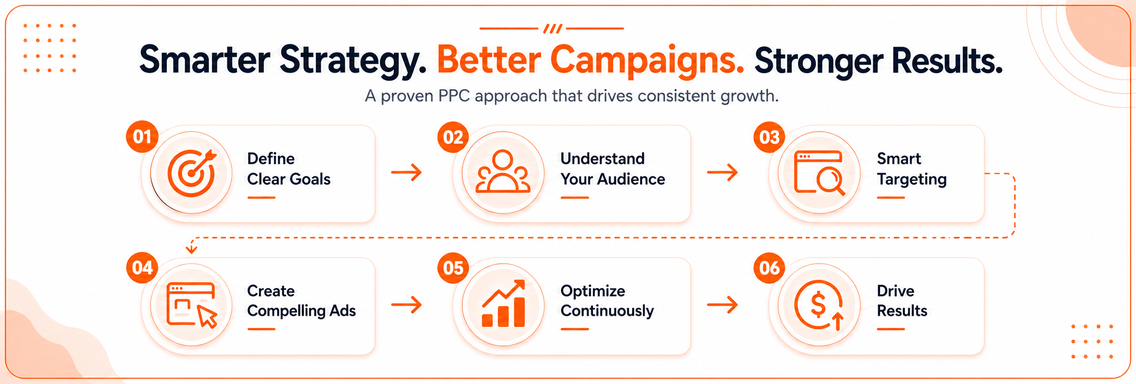
One of the most common mistakes businesses make is trying to automate everything at once. That usually creates confusion instead of clarity. A better approach is to build step by step.
Start with tracking first because without accurate data, even the best AI in PPC cannot perform well. Once tracking is stable, simplify your campaign structure. Too many campaigns or conflicting goals can weaken Google Ads automation performance.
After that, focus on creatives because in 2026, creative performance is often the biggest factor in AI-powered paid advertising success. When these three elements are aligned, automation naturally starts to improve PPC performance.
Why Creative Has Become the Real Performance Driver
There is still a belief that better targeting is the key to PPC success. That is no longer true. Even the most advanced AI in PPC cannot fix weak messaging.
High performing campaigns usually have clear messaging, strong hooks that capture attention quickly, multiple creative variations tested consistently, and offers aligned with user intent. AI can distribute ads efficiently, but it cannot improve what your ad actually communicates.
This is why creative strategy has become more important than manual optimization in modern PPC campaign automation.
The Role of Google Ads Automation Today
Google Ads automation has evolved into a complete ecosystem. It now includes smart bidding systems, automated audience expansion, dynamic ad generation, predictive performance modeling, and cross campaign optimization. It is powerful, but not independent. Without the right structure, it cannot consistently improve PPC performance. When guided correctly, however, it becomes one of the strongest tools for scaling AI-powered paid advertising.
A Simple Framework to Improve PPC Performance
A simple approach often works better than complex strategies.
Start with clean and reliable data so AI in PPC can learn correctly.
Then define clear conversion goals so automation understands what success looks like.
After that, introduce PPC campaign automation gradually instead of changing everything at once.
Build a consistent creative testing process that supports continuous learning.
Finally, review performance on a weekly basis instead of reacting daily.
This allows Google Ads automation systems to stabilize and continuously improve performance over time.
Final Thoughts
The future of PPC is not about doing more work. It is about building smarter systems. AI in PPC and PPC campaign automation have not replaced marketers. They have simply changed what drives results.
Strategy now matters more than manual control.
Creative matters more than constant optimization.
And data quality matters more than anything else.
Businesses that understand this shift will scale faster and get more consistent results from AI-powered paid advertising in 2026. If your campaigns are not performing the way they should, the issue is usually not the platform. It is the system built around it.
Schedule a Free Strategy Call
Most businesses do not actually have a traffic problem. They have a PPC performance problem that quietly limits how much return they can generate from the clicks they are already paying for. If your ads are getting impressions and traffic but not turning into consistent leads or sales, something in your PPC system is not working the way it should.
Let’s break it down and find out what is holding it back.
Book a free strategy call with Excellorix and discover
Why your clicks are not converting into customers
How AI-powered PPC optimization can improve campaign performance and reduce wasted ad spend
Where your landing pages ad creatives or targeting may be causing drop offs
How PPC campaign automation can improve decision making and scaling across your ad accounts
What kind of Google Ads automation and AI in PPC can help you increase ROI and improve lead quality
The goal is not just to get more traffic from ads. It is to turn your existing ad spend into predictable scalable PPC performance and higher ROI through smarter systems and better execution.
If you are focused on building sustainable growth with AI-powered paid advertising and want to truly improve PPC performance, this is where better decisions begin.
FAQ
What is AI in PPC?
AI in PPC refers to the use of artificial intelligence and machine learning to manage and optimize paid advertising campaigns. Instead of relying only on manual decisions, AI analyzes user behavior, performance data, and intent signals to improve targeting, bidding, and overall campaign efficiency. This helps advertisers reach the right audience at the right time with higher accuracy.
How does PPC campaign automation work?
PPC campaign automation works by using smart systems to handle tasks like bidding, budget allocation, audience targeting, and ad testing automatically. These systems continuously learn from performance data and make real-time adjustments to improve results. Over time, this helps reduce manual effort while making campaigns more efficient and scalable.
What is Google Ads automation?
Google Ads automation is a set of tools and features within Google Ads that use machine learning to optimize campaigns. It includes smart bidding, automated targeting, responsive ads, and performance forecasting. The goal is to help advertisers improve results and improve PPC performance without needing constant manual adjustments.
How can I improve PPC performance?
You can improve PPC performance by focusing on a few key areas. Start with accurate conversion tracking so the system has reliable data. Then improve your ad creatives with stronger messaging and better offers. Simplify your campaign structure so automation can work effectively. Finally, regularly review performance to ensure your strategy stays aligned with your goals.
What is AI-powered paid advertising?
AI-powered paid advertising refers to ad campaigns that use artificial intelligence to optimize targeting, bidding, and creative delivery. Instead of manually managing every detail, AI systems automatically adjust campaigns based on user behavior and performance trends. This leads to more efficient spending and better conversion outcomes over time.